
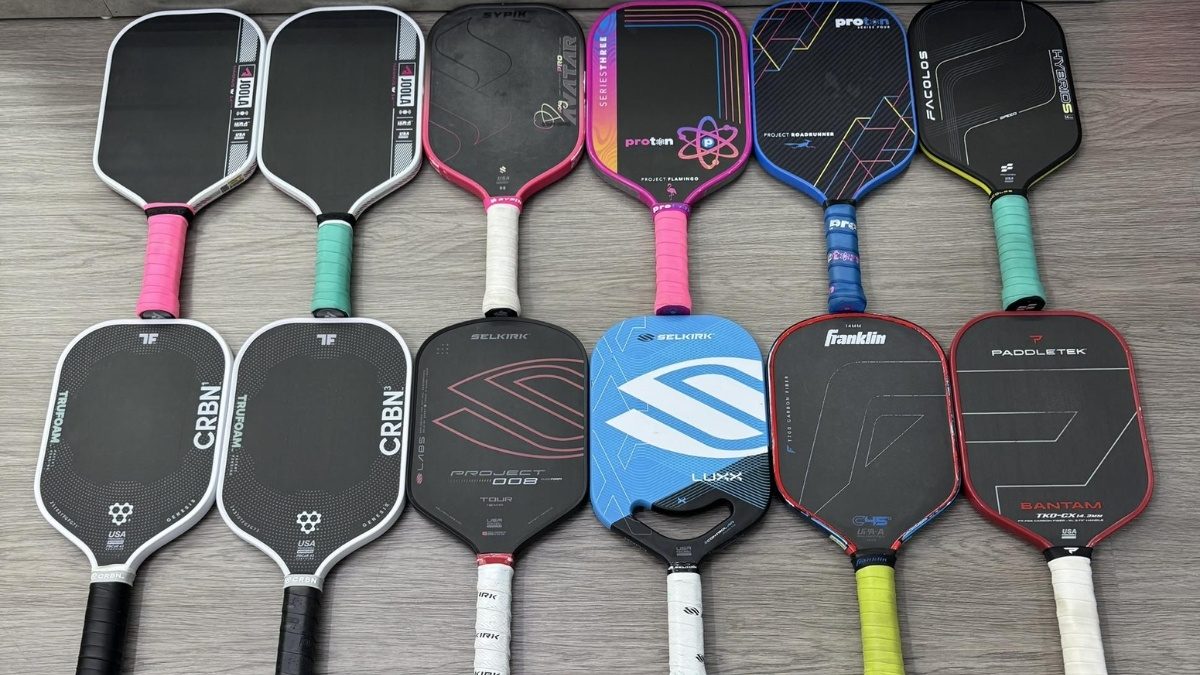
Your first paddle matters more than most beginners think — and less than the marketing suggests. A forgiving paddle with a big sweet spot will make your first month far more fun; a paddle that's too heavy or too lively will teach you bad habits and sore arms.
We compared the most-bought beginner paddles on the specs that actually matter: weight, core thickness, face material, grip size and price. Every pick below is USA Pickleball approved and widely available. Our recommendations come from manufacturer specs, published reviews and owner feedback — we say plainly where we haven't swung a paddle ourselves.
The short answer
| Best overall | JOOLA Ben Johns Hyperion CFS 16 — the paddle you won't outgrow |
| Best value | Selkirk SLK Evo Hybrid Max — light, forgiving, around $60 |
| Best control | Paddletek Bantam EX-L — soft touch for the kitchen game |
| Best for tennis players | HEAD Radical Elite — familiar feel, around $50 |
| Best starter set | niupipo Fiberglass Set of 2 — two paddles, balls and bag |
Our top pick: JOOLA Ben Johns Hyperion CFS 16
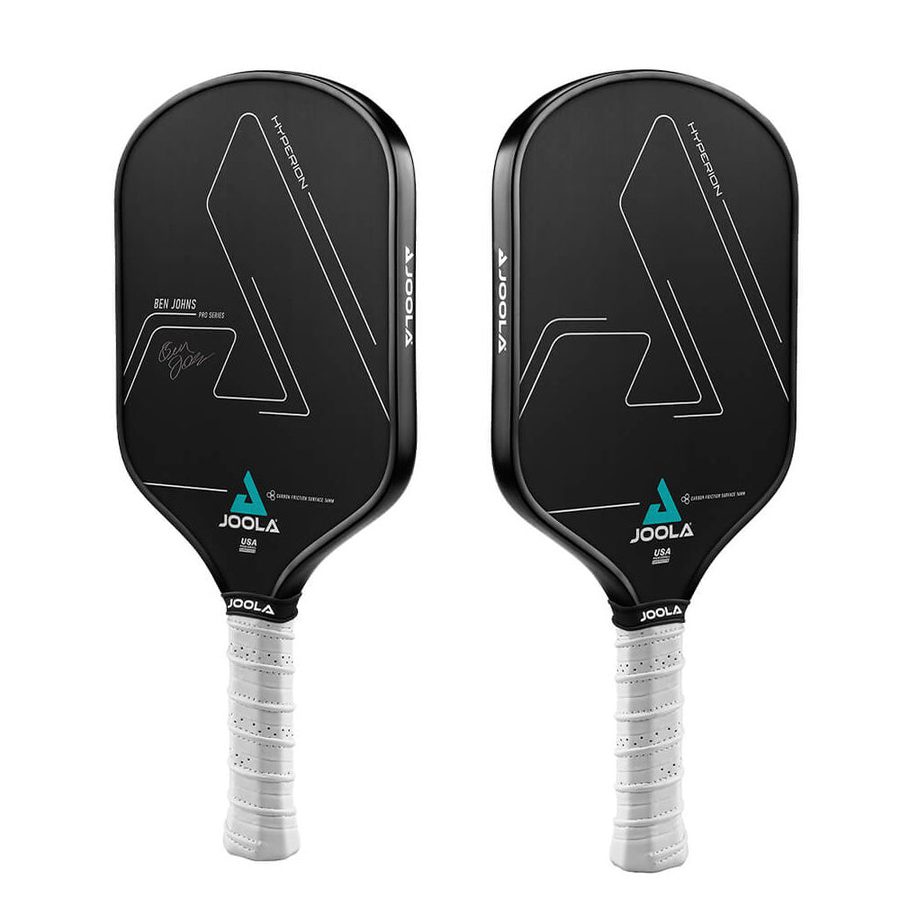
The Hyperion CFS 16 is the beginner paddle that doesn't feel like a beginner paddle. Its 16 mm reactive polymer core and textured carbon face give you a huge sweet spot and easy, controlled power — the two things new players need most. At 8.0–8.4 oz it sits right in the beginner sweet spot: heavy enough to be stable, light enough to swing all morning.
The honest case against it is price. It costs roughly three times the cheapest paddles on this list. But it is also the only pick here that most players never need to replace: the same paddle that forgives your mishits in month one will still reward your spin and placement in year two. If you can stretch the budget once, this is the stretch.
Best overall — won't outgrow it
JOOLA Ben Johns Hyperion CFS 16
16 mm core · Carbon Friction Surface · 8.0–8.4 oz
- + Huge sweet spot, easy power
- + 16 mm core forgives mishits
- − Premium price for a first paddle
Typical price: premium
Check price on Amazon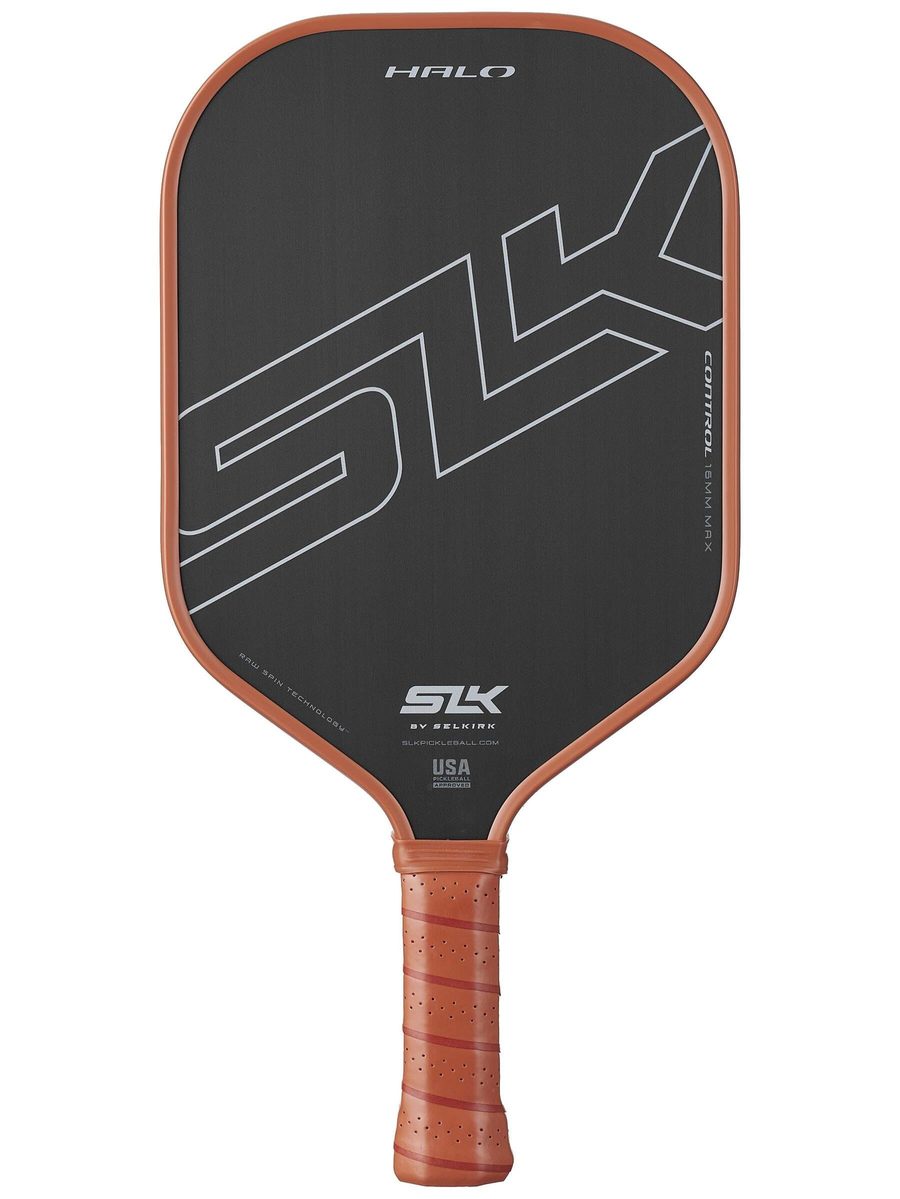
Best control feel
Selkirk SLK Halo Control Max
16 mm Rev-Control core · Raw carbon face · Max shape
- + Soft, predictable touch at the net
- + Raw carbon adds real spin
- − Less free power than fiberglass faces
Typical price: ≈ $150
Check price on AmazonBest value starter: Selkirk SLK Evo Hybrid Max
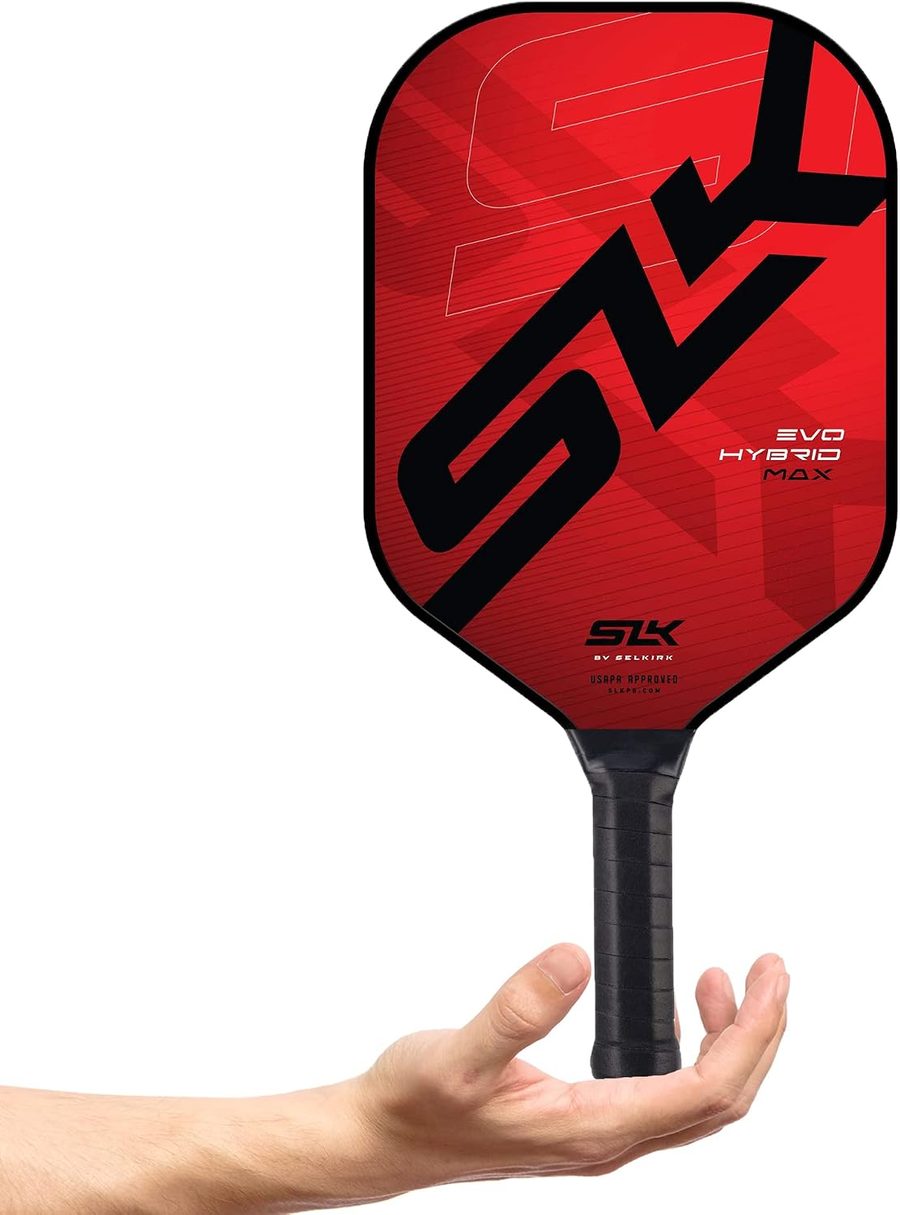
If the Hyperion is the buy-once pick, the Evo Hybrid Max is the smart-money pick. At around $60 you get a 7.6–8.0 oz paddle with a C7-Flex fiberglass face and a 13 mm core — light, lively and genuinely forgiving, from a brand with one of the best reputations in the sport.
The 13 mm core is livelier than the 16 mm cores on this list, so soft dinks take a little more touch. For most beginners that's a fair trade: the Evo Hybrid Max makes serves and drives feel easy, which is exactly what keeps new players coming back.
Best value starter paddle
Selkirk SLK Evo Hybrid Max
13 mm Rev-Hybrid core · C7-Flex fiberglass · 7.6–8.0 oz
- + Light, easy power, big sweet spot
- + Selkirk build quality at a low price
- − 13 mm core is livelier — less soft touch
Typical price: ≈ $60
Check price on Amazon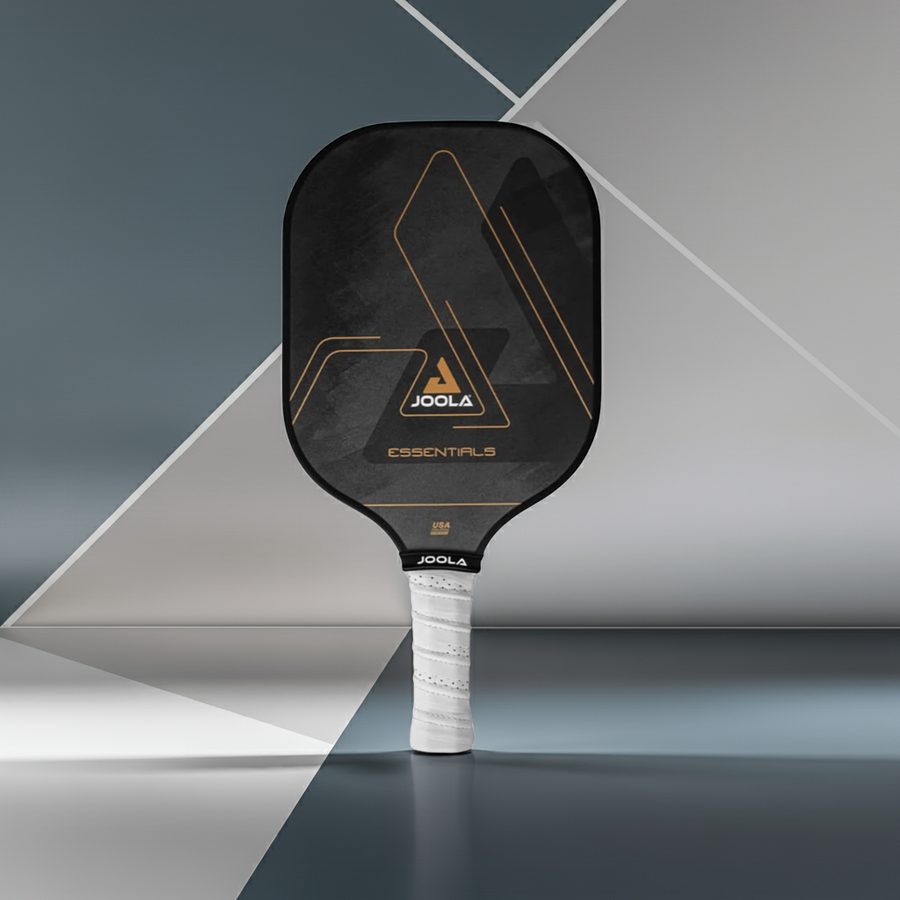
Best first paddle, no fuss
JOOLA Essentials
12 mm core · Reinforced fiberglass face · 8.2 oz
- + Forgiving and easy from day one
- + JOOLA quality at entry price
- − Serious players will outgrow it within a year
Typical price: budget
Check price on AmazonBest for control: Paddletek Bantam EX-L
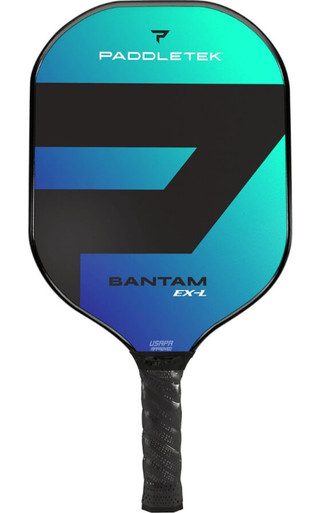
Some beginners fall in love with the soft game first — the dinks, the drops, the long kitchen rallies. If that sounds like you, the Bantam EX-L is the paddle to look at. Its 12.7 mm Bantam PolyCore and polycarbonate face produce a quiet, soft feel that makes resets and blocks far easier than a lively fiberglass paddle does.
The trade-off is power: this paddle doesn't give you anything for free, so drives and serves need a full swing. Patient players who like constructing points will love it; players who want easy pace should look at the fiberglass options instead.
Best for control-first players
Paddletek Bantam EX-L
12.7 mm Bantam PolyCore · Polycarbonate face · 7.8–8.4 oz
- + Superb touch and reset game
- + Quiet, soft feel off the face
- − You supply the power yourself
Typical price: premium
Check price on Amazon
Best control feel
Selkirk SLK Halo Control Max
16 mm Rev-Control core · Raw carbon face · Max shape
- + Soft, predictable touch at the net
- + Raw carbon adds real spin
- − Less free power than fiberglass faces
Typical price: ≈ $150
Check price on AmazonBest for tennis players: HEAD Radical Elite
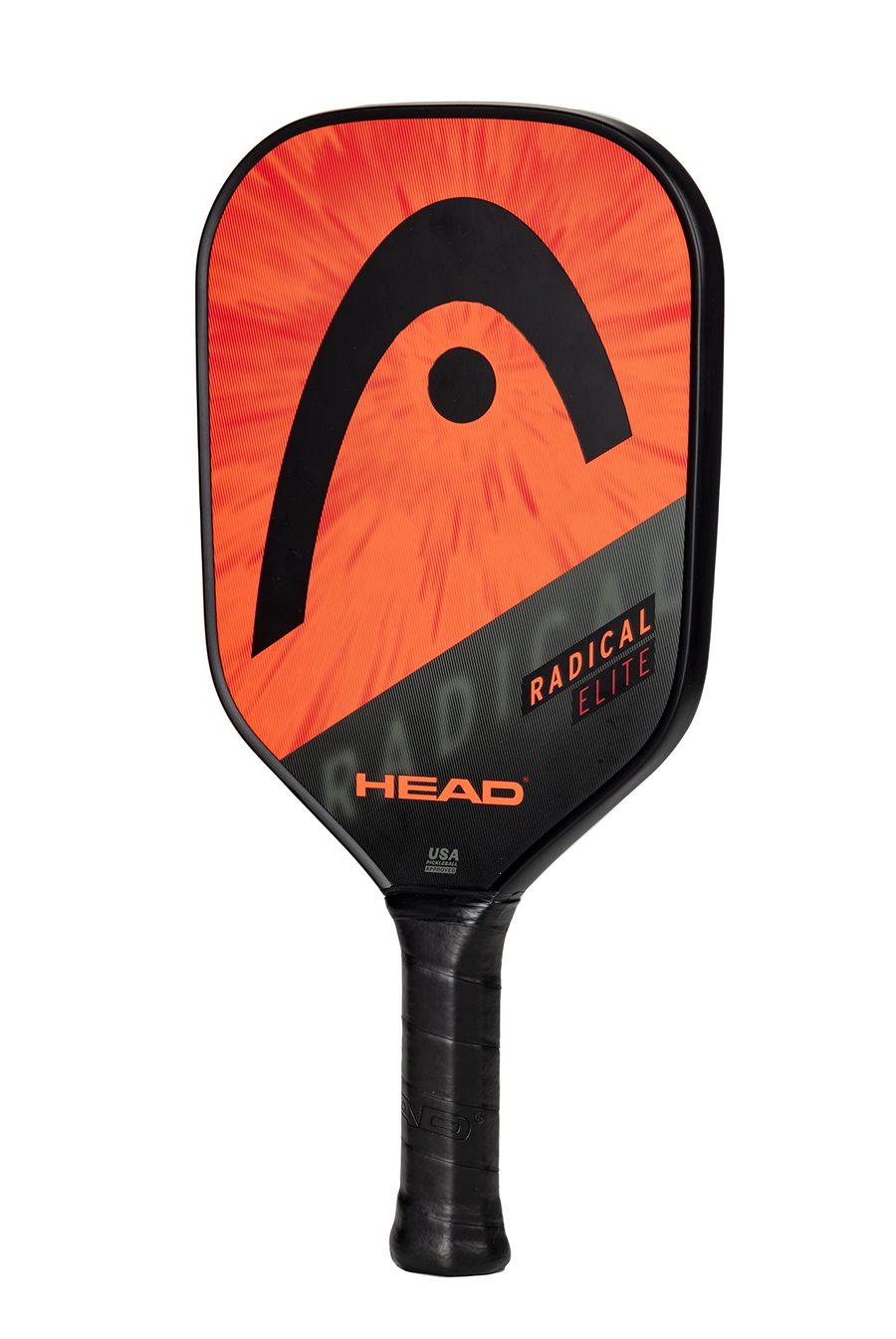
Tennis converts arrive with a full swing and a habit of hitting through the ball — and they usually pick a paddle that's too powerful and too small-headed. The Radical Elite is the fix: a widebody fiberglass face with a big sweet spot, a familiar HEAD grip shape, and a price around $50 that makes it a low-risk experiment.
It's a touch heavier in the swing than the modern lightweight paddles here, which most ex-tennis players actually prefer. The fiberglass face gives easy power on drives; just know the soft game will take a little practice.
Best for tennis players switching over
HEAD Radical Elite
Fiberglass face · Polymer honeycomb core · ~8.1 oz
- + Widebody sweet spot, familiar HEAD grip
- + Hard to beat at this price
- − Heavier swing than modern light paddles
Typical price: ≈ $50
Check price on Amazon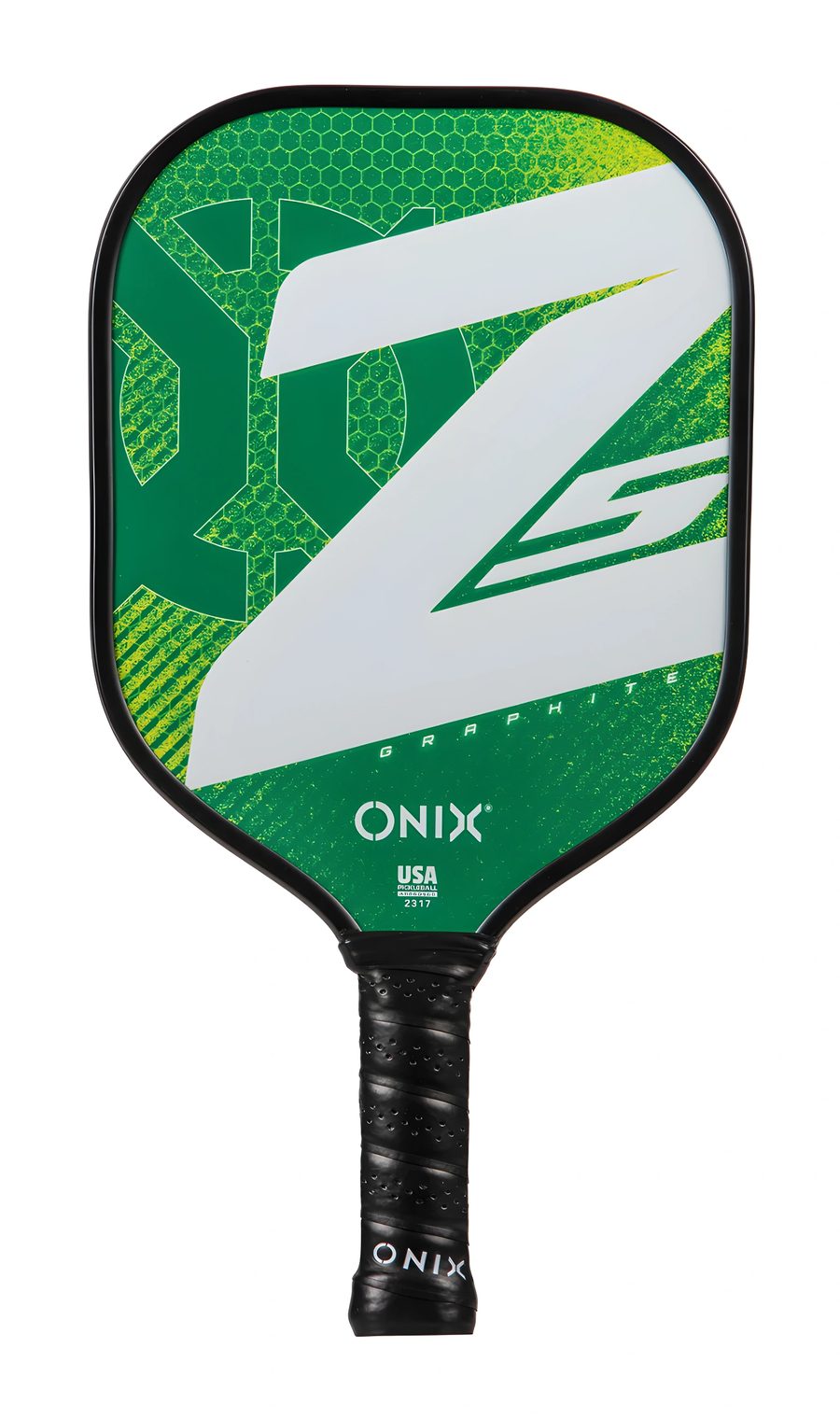
Best classic graphite paddle
ONIX Graphite Z5
Nomex honeycomb core · Graphite face · 7.5–8.2 oz
- + A decade of club-court trust
- + Crisp, light, quick hands
- − Louder, firmer feel than polymer cores
Typical price: ≈ $90
Check price on AmazonBest classic graphite: ONIX Graphite Z5
The Z5 has been the default recommendation at club courts for the better part of a decade, and there's a reason it keeps showing up: a Nomex honeycomb core and graphite face that feel crisp and quick, a wide body that's easy to find the ball with, and a weight range (7.5–8.2 oz) that suits almost everyone.
It is firmer and louder than the polymer-core paddles on this list, and players with sensitive elbows should test it before committing. But as a first 'real' paddle — the one that replaces the loaner from the club bag — the Z5 remains one of the safest buys in pickleball.
Best classic graphite paddle
ONIX Graphite Z5
Nomex honeycomb core · Graphite face · 7.5–8.2 oz
- + A decade of club-court trust
- + Crisp, light, quick hands
- − Louder, firmer feel than polymer cores
Typical price: ≈ $90
Check price on Amazon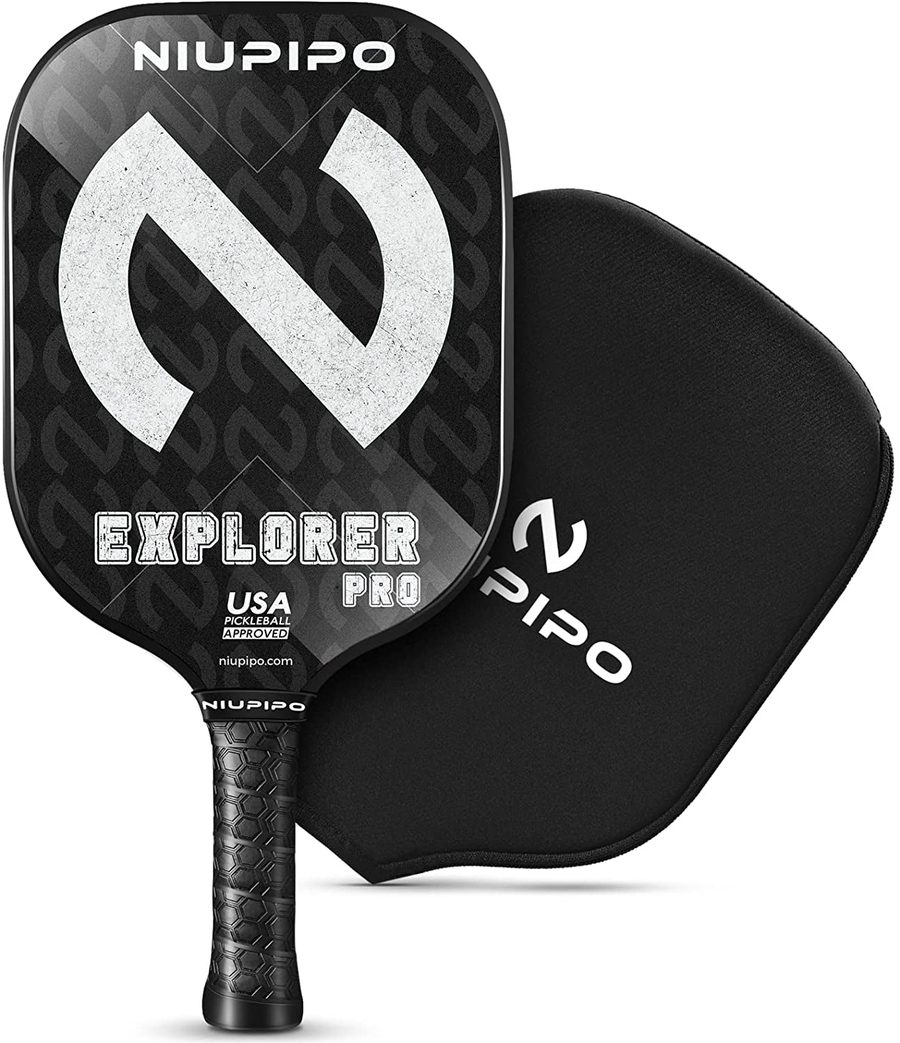
Best sub-$80 all-rounder
niupipo Explorer Pro
Graphite carbon face · Polypropylene core · With cover
- + Comes with a cover — rare at this price
- + Balanced power and control
- − Grip runs small for big hands
Typical price: ≈ $80
Check price on AmazonBest sub-$80 all-rounder: niupipo Explorer Pro
The Explorer Pro is the value pick that doesn't feel like a compromise. A graphite carbon face and polypropylene honeycomb core give a balanced blend of power and control, and it ships with a padded cover — a small thing that most paddles at this price skip entirely.
At around $80 it sits between the budget sets and the premium paddles, and it plays that way: competent everywhere, outstanding nowhere. For a beginner who wants one paddle that does everything reasonably well, that's exactly the brief.
Best sub-$80 all-rounder
niupipo Explorer Pro
Graphite carbon face · Polypropylene core · With cover
- + Comes with a cover — rare at this price
- + Balanced power and control
- − Grip runs small for big hands
Typical price: ≈ $80
Check price on Amazon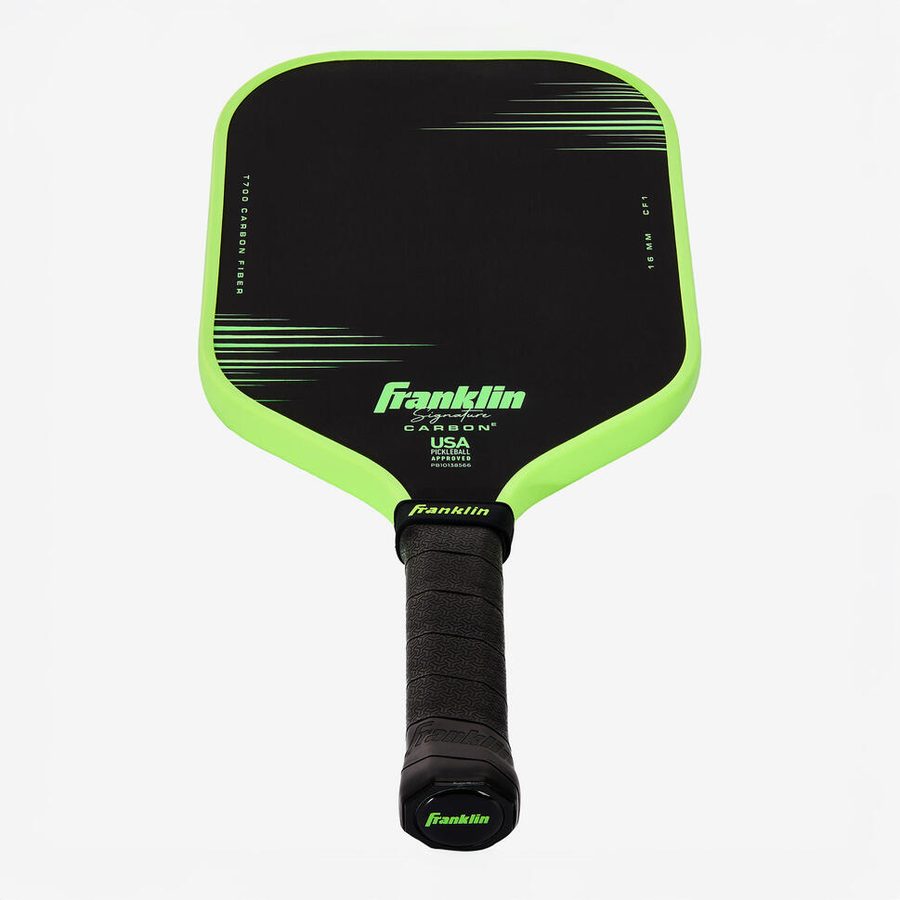
Best carbon feel under $100
Franklin Signature Carbon Series 13 mm
13 mm polypropylene core · T700 carbon face · USAP approved
- + Real carbon face at a fair price
- + MaxGrit-style texture grips the ball
- − 13 mm core needs a softer hand at the net
Typical price: mid-range
Check price on AmazonBest carbon feel under $100: Franklin Signature Carbon
Carbon faces used to mean premium prices. Franklin's Signature Carbon Series brings a T700 carbon fiber face and a 13 mm polypropylene core to the mid-range, with a textured surface that genuinely grips the ball for spin.
The 13 mm core is quick and lively, so the soft game needs a light hand — but that's true of every paddle in this price band. If you want to feel what carbon does for spin without paying premium money, start here.
Best carbon feel under $100
Franklin Signature Carbon Series 13 mm
13 mm polypropylene core · T700 carbon face · USAP approved
- + Real carbon face at a fair price
- + MaxGrit-style texture grips the ball
- − 13 mm core needs a softer hand at the net
Typical price: mid-range
Check price on Amazon
Best control feel
Selkirk SLK Halo Control Max
16 mm Rev-Control core · Raw carbon face · Max shape
- + Soft, predictable touch at the net
- + Raw carbon adds real spin
- − Less free power than fiberglass faces
Typical price: ≈ $150
Check price on AmazonBest two-player starter set: niupipo Fiberglass Set
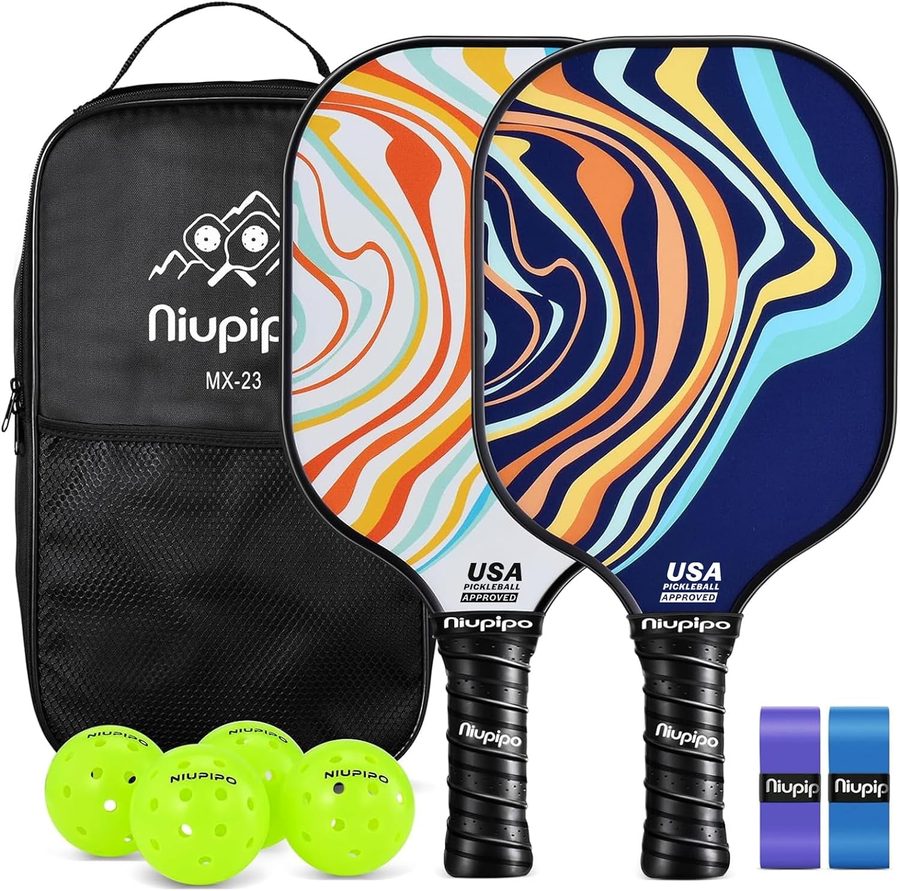
Starting with a partner? A set is the cheapest way to get two people on court. This niupipo set includes two fiberglass paddles, four balls and a carry bag for around $60 — less than most single premium paddles.
Be honest about what you're buying: the paddles are basic, and if you both keep playing you'll each want an upgrade within a few months. But as a first step — two people, one box, on court in ten minutes — it's the best value on this page.
Best two-player starter set
niupipo Fiberglass Paddle Set of 2
2 paddles + 4 balls + bag · Fiberglass faces
- + Everything two beginners need in one box
- + Balls and bag included
- − Paddles are basic — upgrade later if you stick with it
Typical price: ≈ $60
Check price on Amazon
Best first paddle, no fuss
JOOLA Essentials
12 mm core · Reinforced fiberglass face · 8.2 oz
- + Forgiving and easy from day one
- + JOOLA quality at entry price
- − Serious players will outgrow it within a year
Typical price: budget
Check price on AmazonBest first paddle, no fuss: JOOLA Essentials
Some beginners don't want a research project; they want a paddle that works. The JOOLA Essentials is that paddle: a reinforced fiberglass face, a 12 mm honeycomb core, 8.2 oz, USA Pickleball approved, from a brand every club player knows.
It's forgiving, predictable and cheap enough that upgrading later doesn't sting. Serious players will outgrow it within a year — but by then you'll know exactly what you want in your next paddle, which is worth more than any spec sheet.
Best first paddle, no fuss
JOOLA Essentials
12 mm core · Reinforced fiberglass face · 8.2 oz
- + Forgiving and easy from day one
- + JOOLA quality at entry price
- − Serious players will outgrow it within a year
Typical price: budget
Check price on Amazon
Best value starter paddle
Selkirk SLK Evo Hybrid Max
13 mm Rev-Hybrid core · C7-Flex fiberglass · 7.6–8.0 oz
- + Light, easy power, big sweet spot
- + Selkirk build quality at a low price
- − 13 mm core is livelier — less soft touch
Typical price: ≈ $60
Check price on AmazonBest widebody forgiveness: Selkirk SLK Halo Control Max
The Halo Control Max pairs a raw carbon face with a plush 16 mm Rev-Control core, and the result is the softest, most predictable paddle in this guide. Mishits stay in play, dinks drop where you aim them, and the Max shape gives you the largest hitting surface Selkirk makes in this line.
At around $150 it's a premium pick, and the carbon face gives less free power than fiberglass. But if your priority is control and consistency from day one — and you want a paddle that still suits you at 3.5 and beyond — the Halo is hard to fault.
Best control feel
Selkirk SLK Halo Control Max
16 mm Rev-Control core · Raw carbon face · Max shape
- + Soft, predictable touch at the net
- + Raw carbon adds real spin
- − Less free power than fiberglass faces
Typical price: ≈ $150
Check price on Amazon
Best for control-first players
Paddletek Bantam EX-L
12.7 mm Bantam PolyCore · Polycarbonate face · 7.8–8.4 oz
- + Superb touch and reset game
- + Quiet, soft feel off the face
- − You supply the power yourself
Typical price: premium
Check price on AmazonWhat weight should a beginner choose?
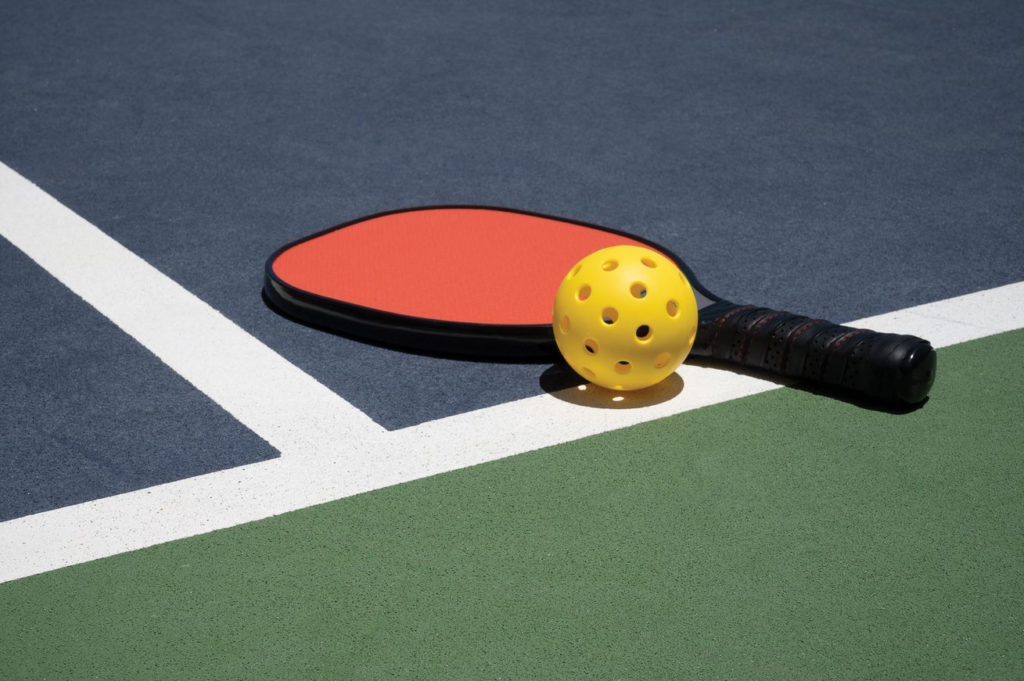
Most beginners should start between 7.5 and 8.4 oz — the midweight range. Lighter paddles are quicker at the net and easier on the arm; heavier paddles add stability and power on drives. If you have any history of elbow or shoulder trouble, start light and stay light.
A simple test: hold the paddle out in front of you, arm straight, for 30 seconds. If your shoulder starts complaining, the paddle is too heavy for long sessions. Both the ONIX Z5 and the Hyperion CFS 16 sit in the range we'd recommend for most new players.
Best classic graphite paddle
ONIX Graphite Z5
Nomex honeycomb core · Graphite face · 7.5–8.2 oz
- + A decade of club-court trust
- + Crisp, light, quick hands
- − Louder, firmer feel than polymer cores
Typical price: ≈ $90
Check price on Amazon
Best overall — won't outgrow it
JOOLA Ben Johns Hyperion CFS 16
16 mm core · Carbon Friction Surface · 8.0–8.4 oz
- + Huge sweet spot, easy power
- + 16 mm core forgives mishits
- − Premium price for a first paddle
Typical price: premium
Check price on AmazonGrip size: the 30-second check
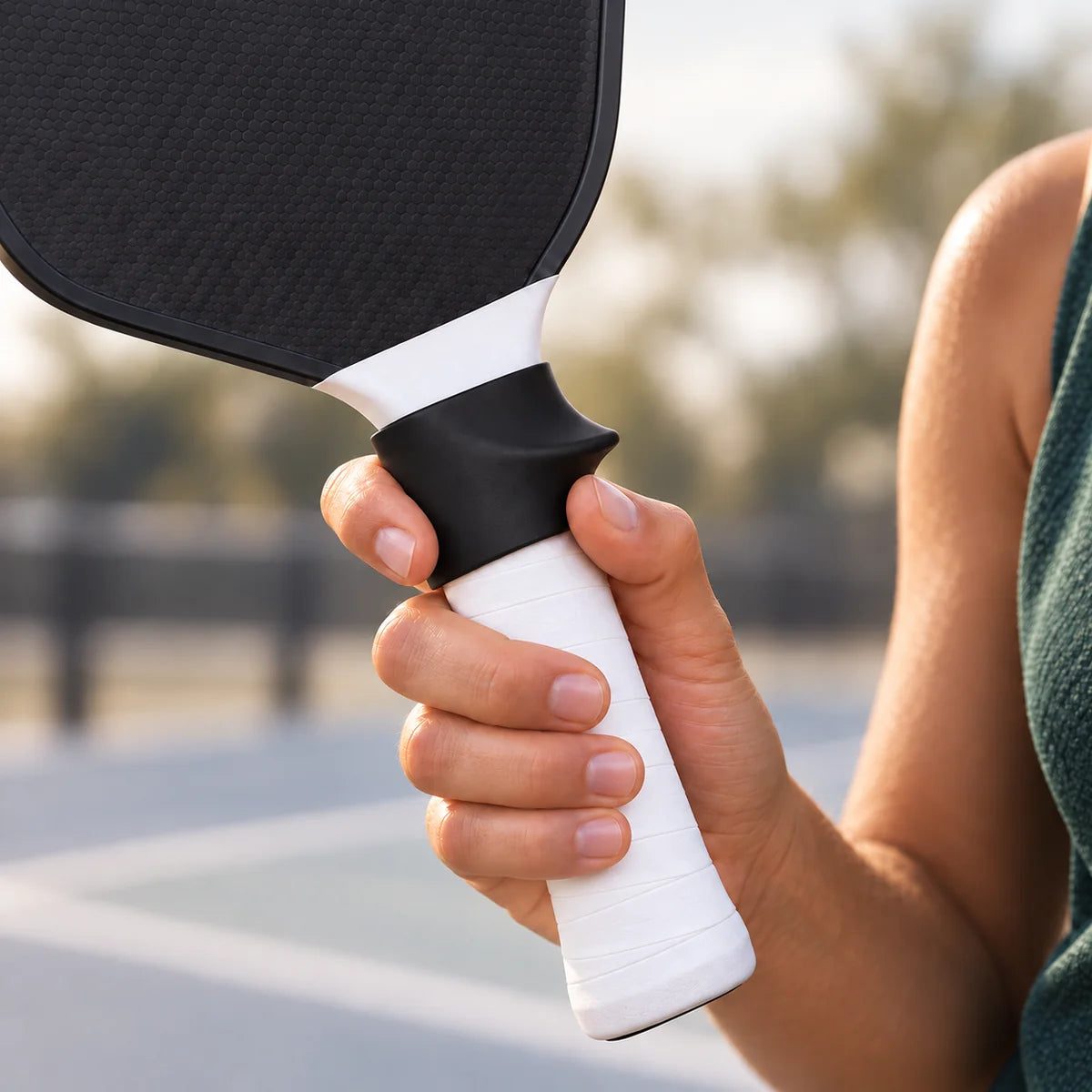
Most adult beginners should start with a 4¼-inch grip circumference — it's the standard for a reason. To check your fit, hold the paddle in your playing hand and slide the index finger of your other hand into the gap between your fingertips and your palm. It should fit snugly, not loosely and not tight.
Too small a grip makes you squeeze harder, which is the fastest route to a sore elbow. Too big, and you'll lose wrist snap on serves. When in doubt, go smaller: an overgrip can add size later, but nothing makes a grip smaller.
Best first paddle, no fuss
JOOLA Essentials
12 mm core · Reinforced fiberglass face · 8.2 oz
- + Forgiving and easy from day one
- + JOOLA quality at entry price
- − Serious players will outgrow it within a year
Typical price: budget
Check price on Amazon
Best value starter paddle
Selkirk SLK Evo Hybrid Max
13 mm Rev-Hybrid core · C7-Flex fiberglass · 7.6–8.0 oz
- + Light, easy power, big sweet spot
- + Selkirk build quality at a low price
- − 13 mm core is livelier — less soft touch
Typical price: ≈ $60
Check price on AmazonCore thickness: 13 mm vs 16 mm
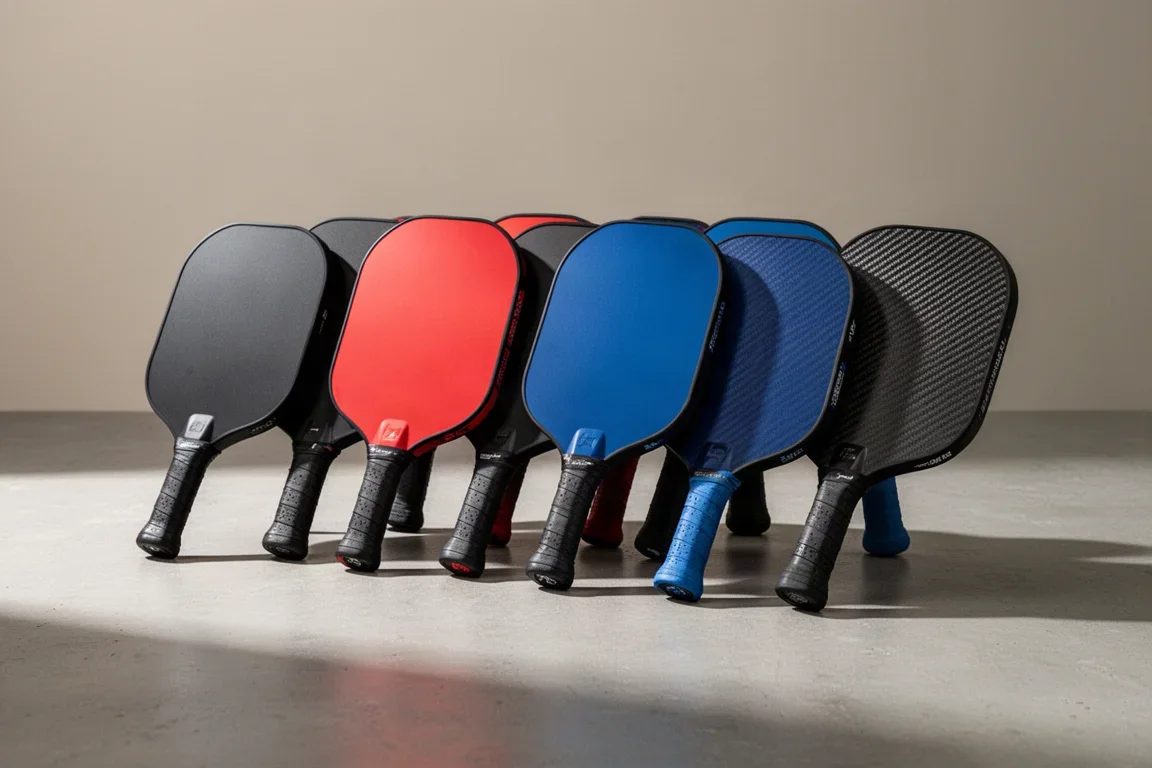
Core thickness is the single biggest feel decision in a paddle. A 16 mm core is softer and more forgiving — better touch, bigger sweet spot, slower ball. A 13 mm core is livelier — more pop, faster hands, less margin for error.
Our advice for beginners: start at 16 mm if you value control and plan to play the soft game; start at 13 mm if you come from tennis or racquetball and want familiar pace. Either way, don't overthink it — your second paddle is where the fine-tuning happens.
Best control feel
Selkirk SLK Halo Control Max
16 mm Rev-Control core · Raw carbon face · Max shape
- + Soft, predictable touch at the net
- + Raw carbon adds real spin
- − Less free power than fiberglass faces
Typical price: ≈ $150
Check price on Amazon
Best for tennis players switching over
HEAD Radical Elite
Fiberglass face · Polymer honeycomb core · ~8.1 oz
- + Widebody sweet spot, familiar HEAD grip
- + Hard to beat at this price
- − Heavier swing than modern light paddles
Typical price: ≈ $50
Check price on AmazonBalls to buy with your first paddle
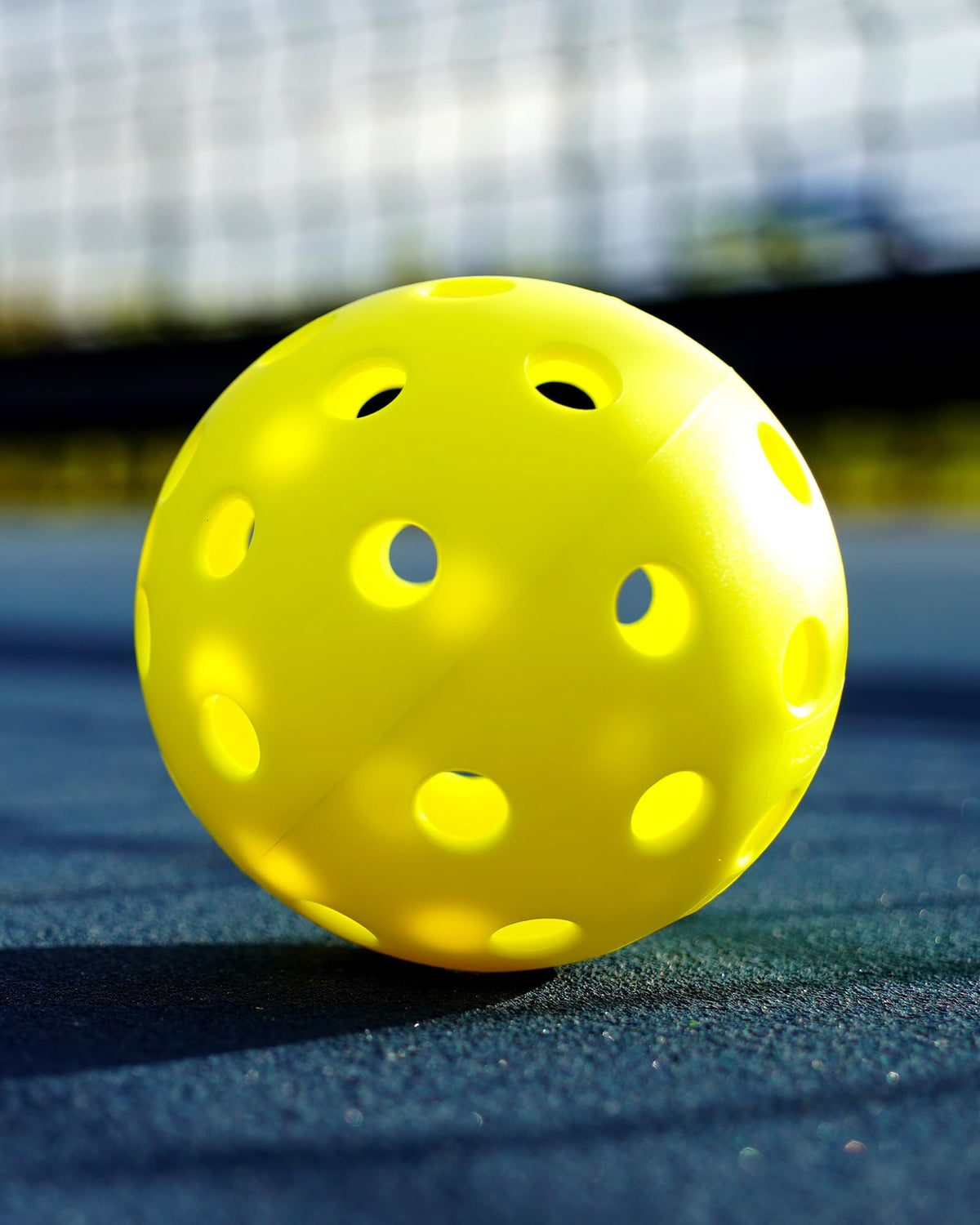
Your paddle choice matters less if you're hitting the wrong ball. Outdoors, the Franklin X-40 is the club standard — the official ball of the US Open, with a true, consistent bounce. A 12-pack costs around $30 and will last a beginner group for months.
If you play faster outdoor games or tournaments, the ONIX Dura Fast 40 is the classic tournament ball — quicker through the air, though it goes soft sooner. Buy the X-40 first; add the Dura when your group starts talking about tournaments.
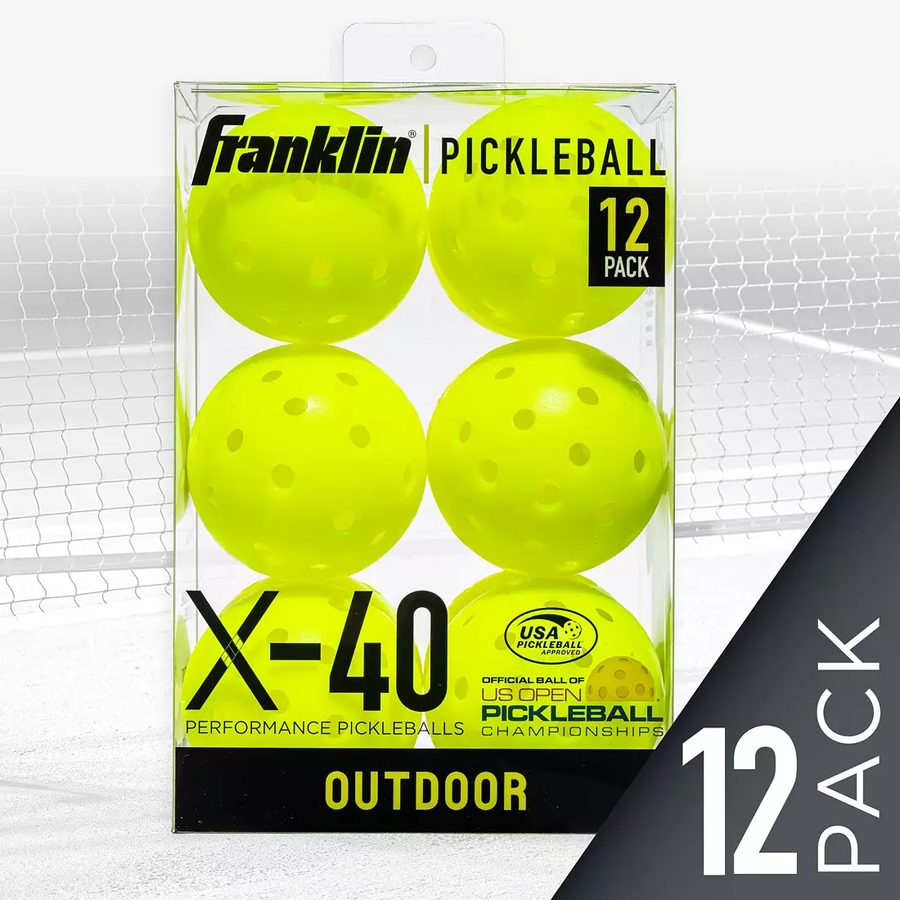
Best outdoor ball — the club standard
Franklin Sports X-40 Outdoor Pickleballs (12-pack)
40 holes · Seamless one-piece · USA Pickleball approved
- + True, consistent bounce outdoors
- + Official ball of the US Open
- − Cracks in cold weather — keep spares
Typical price: ≈ $30
Check price on Amazon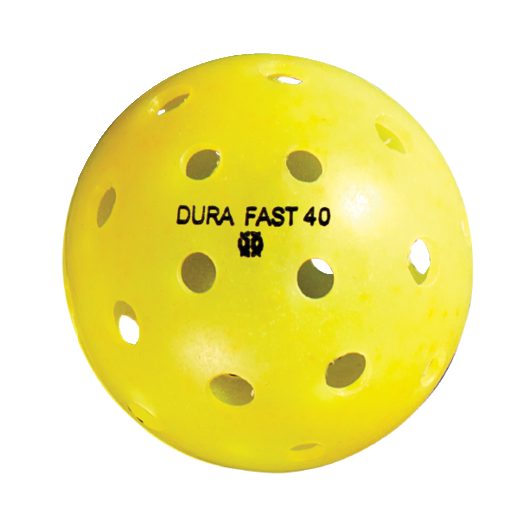
Best fast tournament ball
ONIX Dura Fast 40 Outdoor Pickleballs (4-pack)
40 holes · Roto-molded seamless · Tournament ball
- + The fastest-playing classic outdoor ball
- + Used in more pro events than any other
- − Goes soft and out-of-round faster than the X-40
Typical price: ≈ $13
Check price on AmazonThe rest of the starter kit
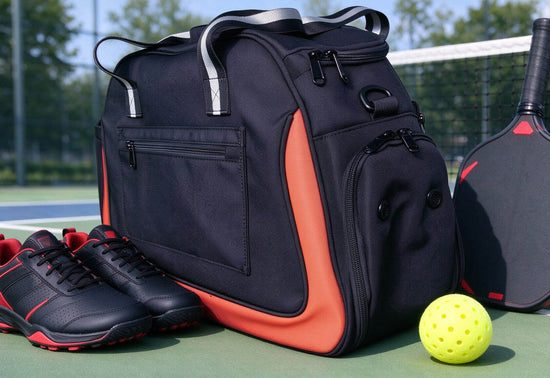
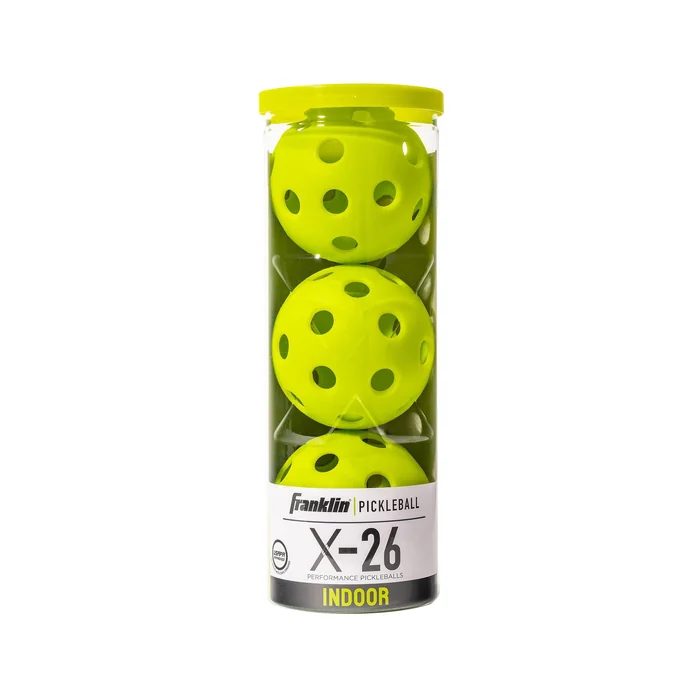
Beyond paddle and balls, two things are worth buying early. First, the right balls for where you play: indoor balls like the Franklin X-26 if your club plays in a gym — outdoor balls bounce wrong on gym floors. Second, real court shoes. Running shoes are built to move forward; pickleball is lateral stops all morning, and the wrong shoes are how ankles get rolled.
The Skechers Viper Court Pro 2.0 is our pick for a first court shoe: built for lateral movement, with Arch Fit support that holds up in long sessions. Everything else — bags, overgrips, paddle covers — can wait until you know you're hooked.
Best indoor ball
Franklin Sports X-26 Indoor Pickleballs (12-pack)
26 larger holes · 26 g · Built for gym floors
- + Lighter, slower — suits indoor rallies
- + Easy to see under gym lights
- − Useless outdoors — wind pushes it around
Typical price: budget
Check price on Amazon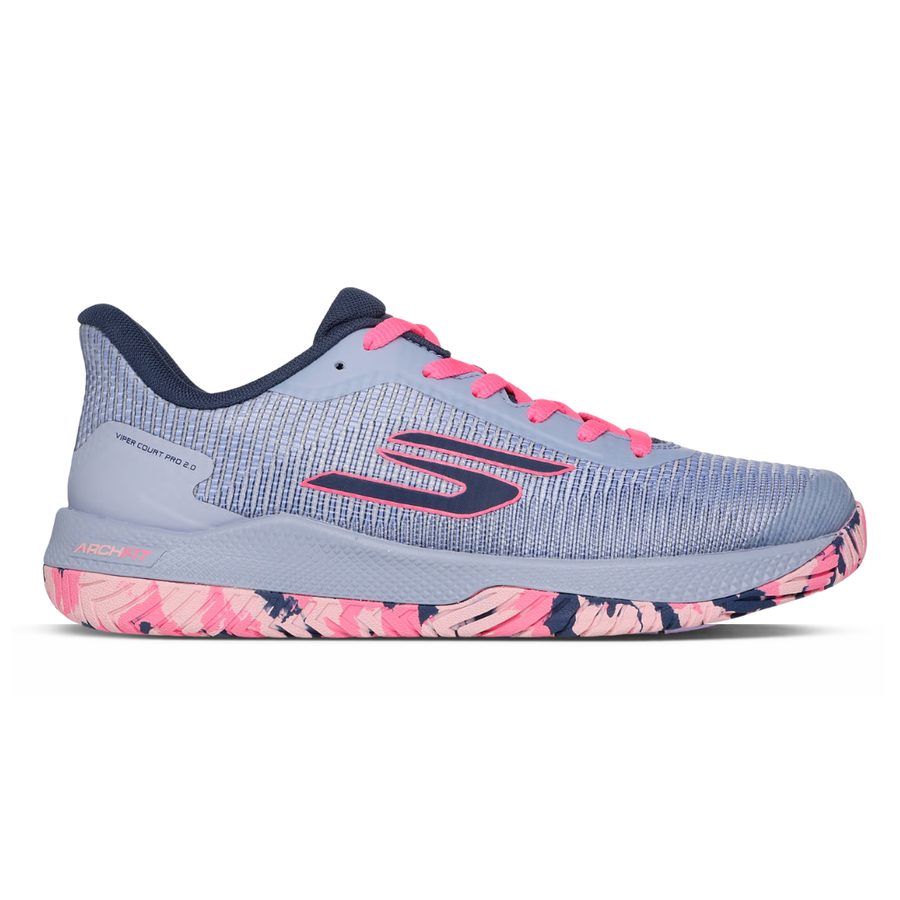
Best court shoe for pickleball
Skechers Viper Court Pro 2.0
Arch Fit insole · Goodyear rubber outsole · Court-specific
- + Built for lateral stops, not running
- + Arch Fit support holds up in long sessions
- − Runs slightly narrow — try a half size up if unsure
Typical price: ≈ $100
Check price on AmazonFrequently asked questions
What is the best pickleball paddle for a complete beginner?
For most beginners, the Selkirk SLK Evo Hybrid Max is the best starting point: light, forgiving and around $60. If you want a paddle you won't outgrow, the JOOLA Hyperion CFS 16 is the buy-once pick.
How much should a beginner spend on a paddle?
A good beginner paddle costs $50–$100. Below $50 you're usually buying a set or a very basic paddle; above $100 you're paying for carbon faces and thicker cores that most beginners don't need yet.
What weight paddle should a beginner use?
Start between 7.5 and 8.4 oz. Lighter is easier on the arm and quicker at the net; heavier adds power and stability. Players with elbow trouble should start at the light end.
Is a 13 mm or 16 mm core better for beginners?
A 16 mm core is softer and more forgiving, which suits most beginners. A 13 mm core is livelier and more powerful. If you come from tennis, 13 mm will feel familiar; everyone else should start at 16 mm.
Do I need a USA Pickleball approved paddle?
For casual and club play, approval doesn't matter. For sanctioned tournaments it does — and every paddle in this guide is approved, so you won't have to re-buy later.
Should beginners buy a paddle set or a single paddle?
A set makes sense if you're starting with a partner and want the lowest cost per person. If you're joining a club on your own, a single quality paddle like the Evo Hybrid Max is the better buy.
How long does a beginner paddle last?
A decent paddle lasts 1–2 years of regular recreational play before the face wears and the core softens. Cheaper paddles wear faster; carbon faces hold their texture longer.
Can I use a tennis grip on a pickleball paddle?
You can start with a continental grip — the 'handshake' grip — which works for forehands, backhands and serves. We cover it step by step in our grip guide.
As an Amazon Associate, Pickleball Pick earns from qualifying purchases. Our picks are chosen by research, not by commission — see our Affiliate Disclosure.