
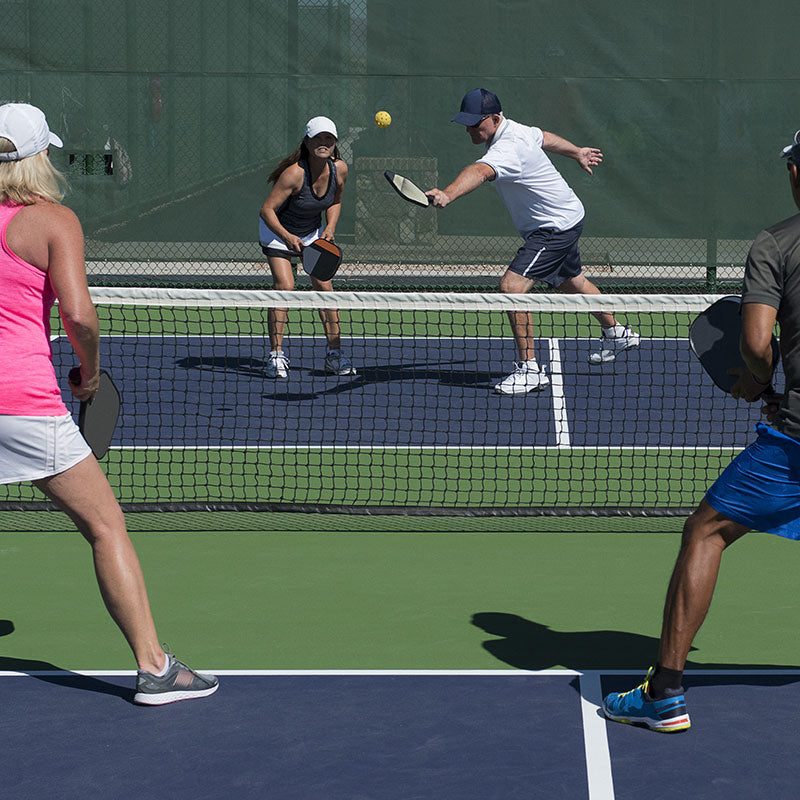
Pickleball has a reputation for confusing scoring — three numbers, side-outs, a kitchen you can't stand in. In reality the whole game fits on one page, and most of it will click during your first rally.
This guide covers the rules as they apply to casual and club doubles, which is how almost everyone starts. Tournament play adds a few details (rally scoring is used in some pro events), but the core rules below are the ones you'll use every week.
The short answer
| Games to | 11 points, win by 2 |
| Who scores | Only the serving team |
| Serve | Underhand, below the waist, diagonal cross-court |
| Double bounce | Each side must let the ball bounce once before volleys |
| Kitchen | No volleys inside the 7-foot non-volley zone |
The court in 30 seconds
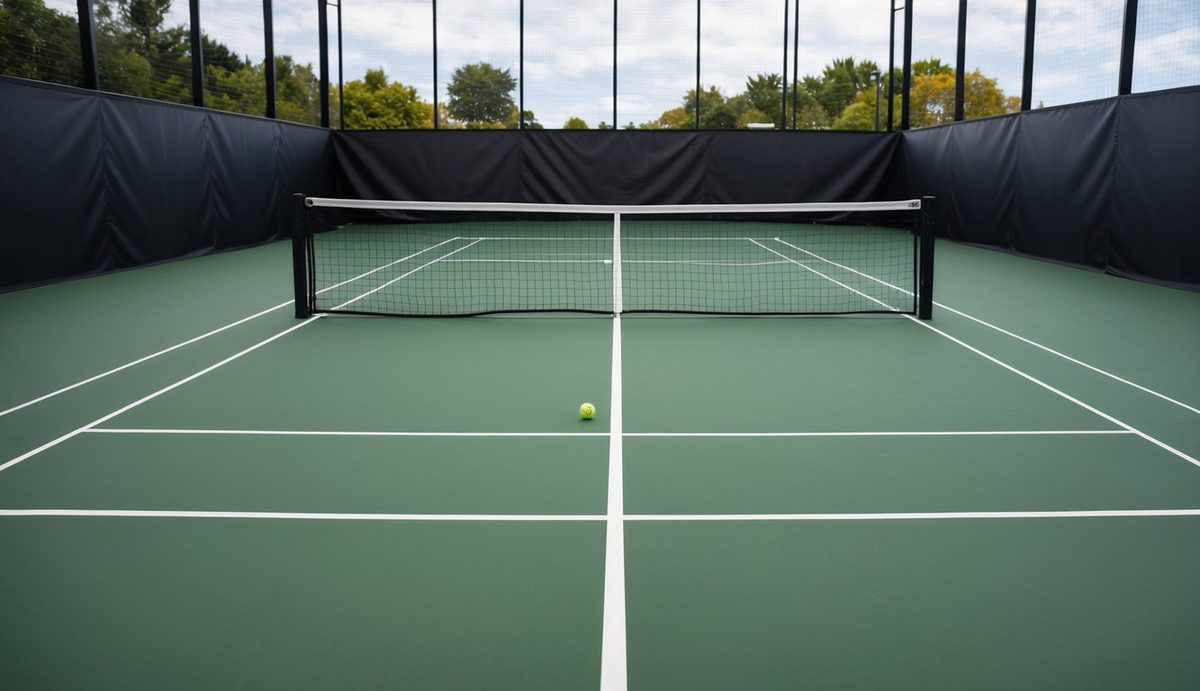
A pickleball court is 20 feet wide and 44 feet long — about a quarter of a tennis court — with a net 36 inches high at the sidelines and 34 inches at the center. The court is split into service boxes by a centerline, and the 7-foot zone on each side of the net is the non-volley zone, universally called the kitchen.
If you're setting up your own court, a portable net like the ONIX 2-in-1 gives you regulation dimensions in a driveway or gym, and a 12-pack of X-40s is enough balls for a full group.
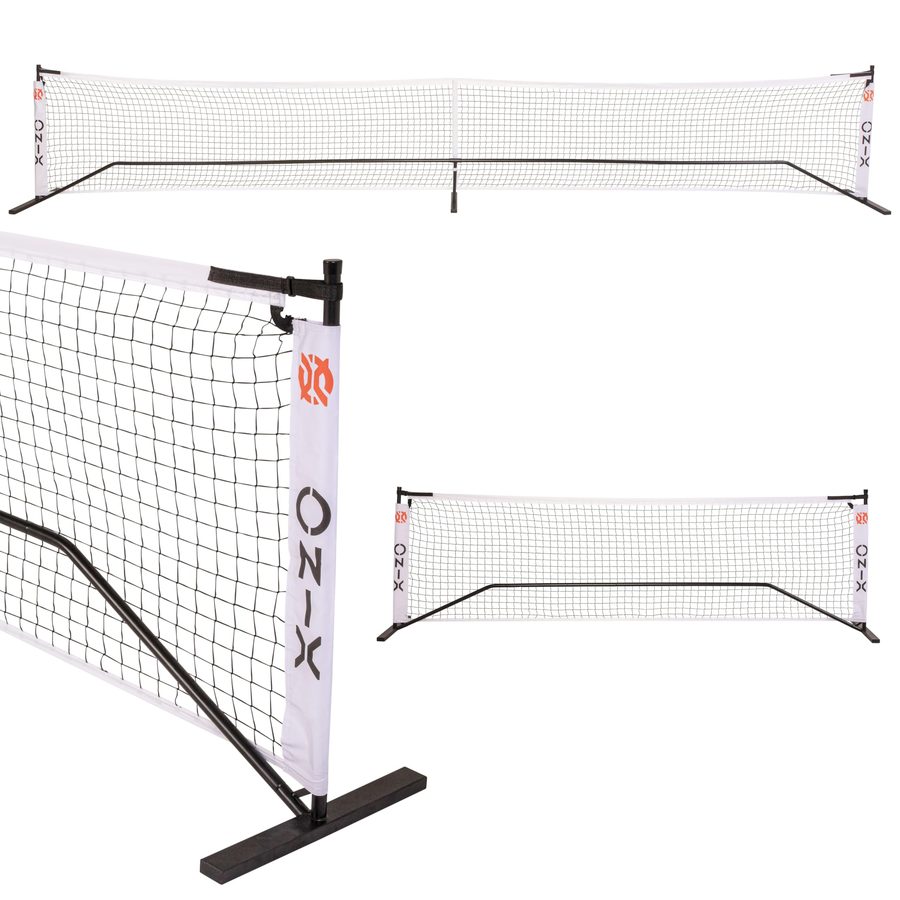
Best portable net for driveway games
ONIX 2-in-1 Portable Pickleball Net
22 ft regulation + 10 ft practice · Wheeled carry case
- + Regulation size plus a practice width
- + Wheeled case makes setup painless
- − Heavier than ultralight nets — this is the sturdy one
Typical price: ≈ $150
Check price on Amazon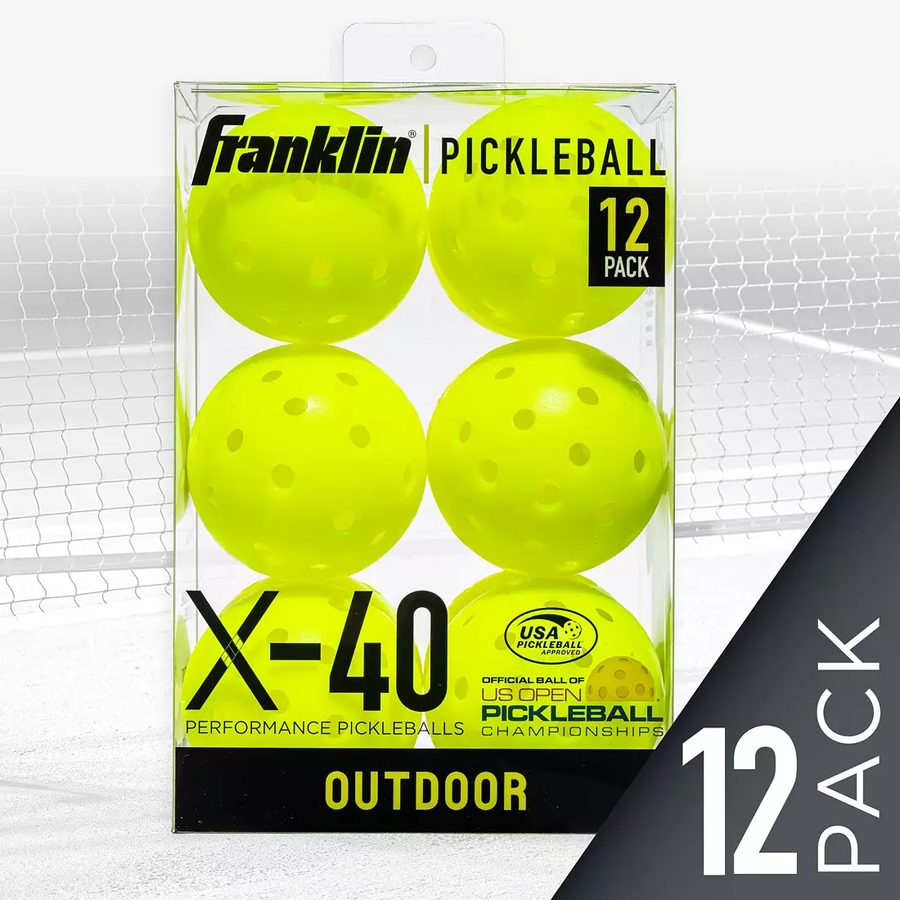
Best outdoor ball — the club standard
Franklin Sports X-40 Outdoor Pickleballs (12-pack)
40 holes · Seamless one-piece · USA Pickleball approved
- + True, consistent bounce outdoors
- + Official ball of the US Open
- − Cracks in cold weather — keep spares
Typical price: ≈ $30
Check price on AmazonServing rules

The serve must be underhand, with the paddle below your wrist and the ball struck below your waist. You serve diagonally cross-court, from behind the baseline, and the ball must land in the opposite service box — past the kitchen line, inside the lines.
Only one serve attempt is allowed (no second serve like tennis), but the rules are forgiving about style: drop serves, where you drop the ball and hit it after the bounce, are legal and a great option for beginners.
The double-bounce rule
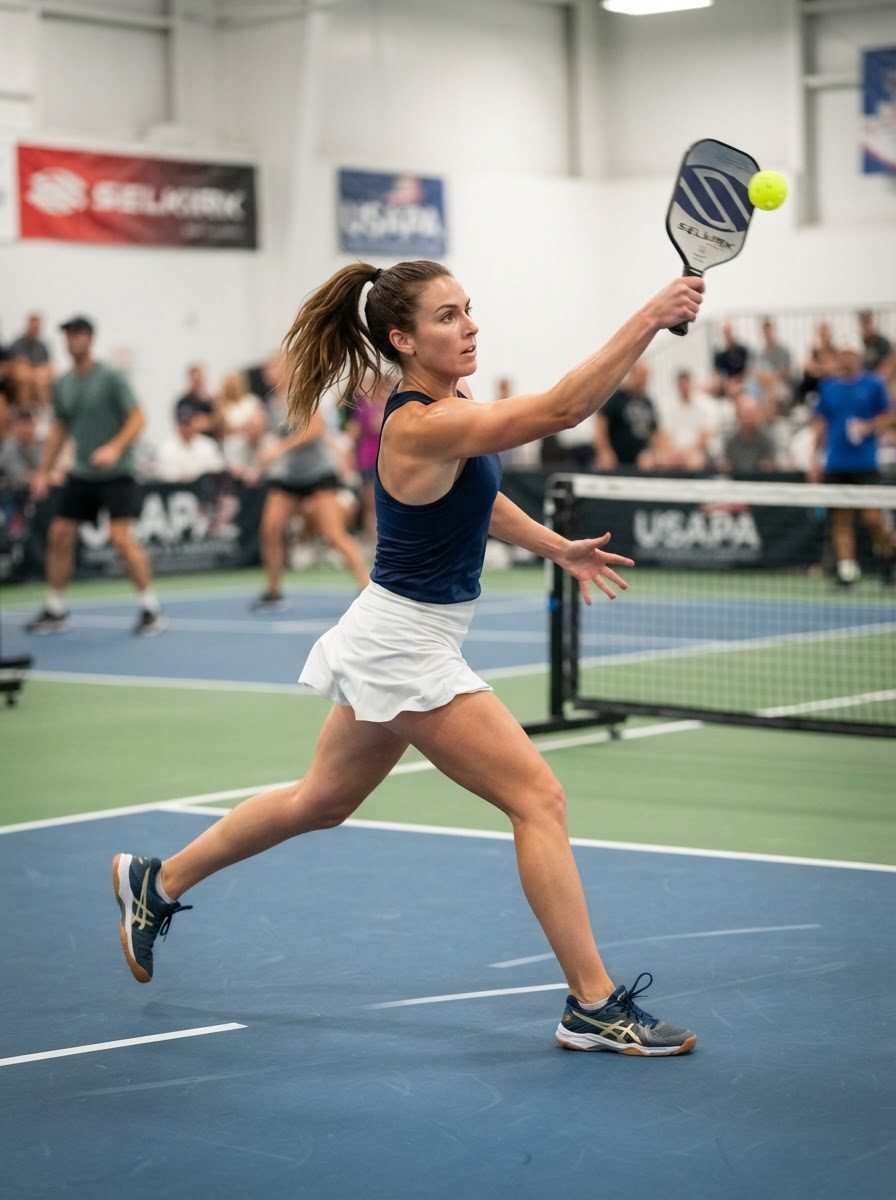
This is the rule that makes pickleball pickleball. After the serve, the receiving team must let the ball bounce before returning it. Then the serving team must also let the return bounce before hitting it. Only after those two bounces can either side volley the ball out of the air.
The point of the rule is to keep the serving team from rushing the net and ending rallies immediately. In practice it means the first two shots of every rally are groundstrokes — and that's where most beginners should focus their practice.
Scoring: only the server scores
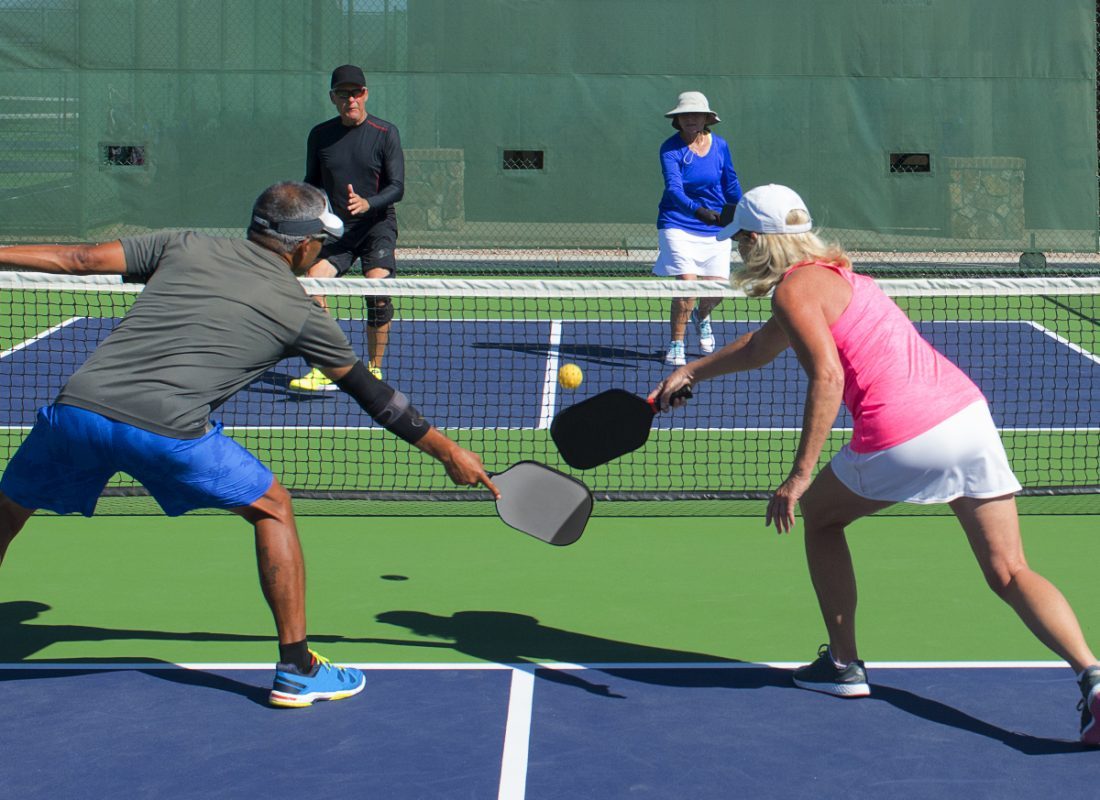
Games are played to 11 points, win by 2. The key scoring rule: only the serving team can score a point. If the serving team wins the rally, they score and keep serving. If the receiving team wins the rally, nobody scores — the serve just changes hands. This is called a side-out.
In doubles, each team gets two serves per turn (one per player) except at the very start of the game, when the first serving team gets only one serve. That exception trips up every beginner exactly once.
Calling the score: three numbers
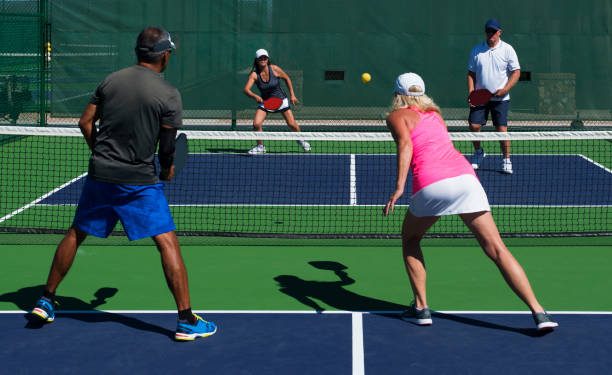
The score is called as three numbers: serving team's score, receiving team's score, and the server number (1 or 2). So '6–4–2' means the serving team has 6, the receiving team has 4, and this is the second server.
At the start of the game the score is 0–0–2 — the '2' reflects the first-team-only-one-serve rule. Say the score out loud before every serve; it's the server's job, and it's how everyone keeps track.
The kitchen (non-volley zone)
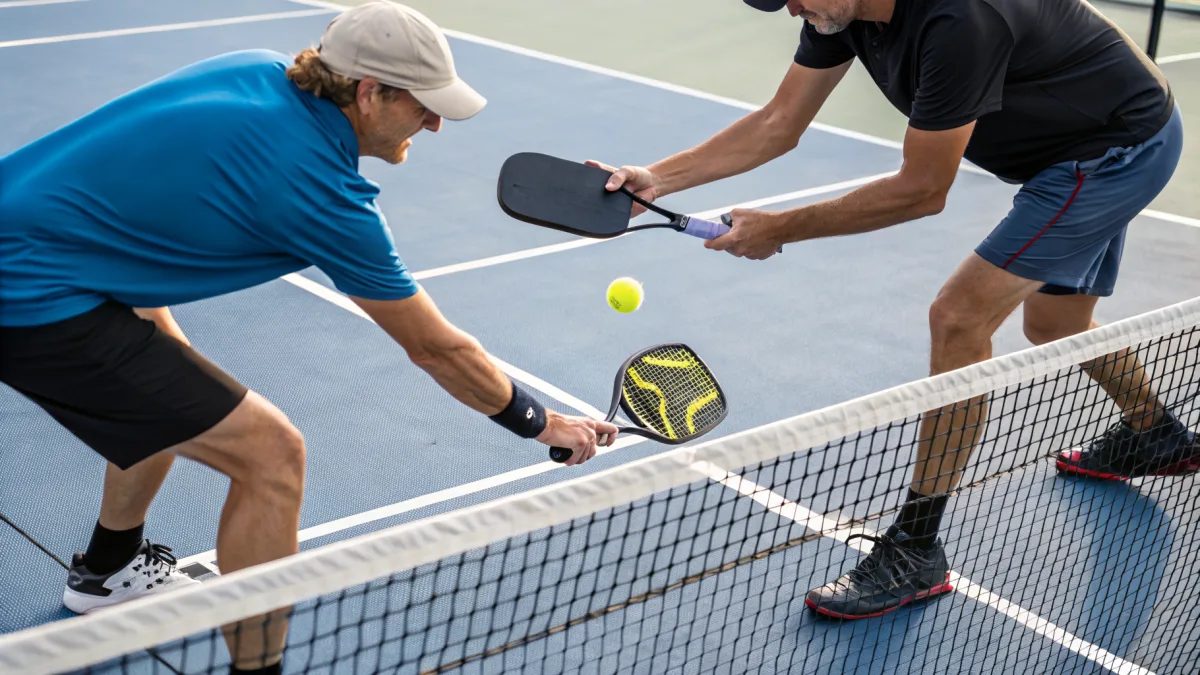
The kitchen is the 7-foot zone on each side of the net. You can stand in it any time — but you can't volley (hit the ball out of the air) while any part of you, including your paddle, is touching it. If you volley from the kitchen, it's a fault and you lose the rally.
You can step into the kitchen to hit a ball after it bounces, and you can be in the kitchen when your partner hits the ball. The rule only bans volleys. Most kitchen faults happen on momentum — you volley legally, then your momentum carries you into the zone. That still counts as a fault.
Faults that end the rally
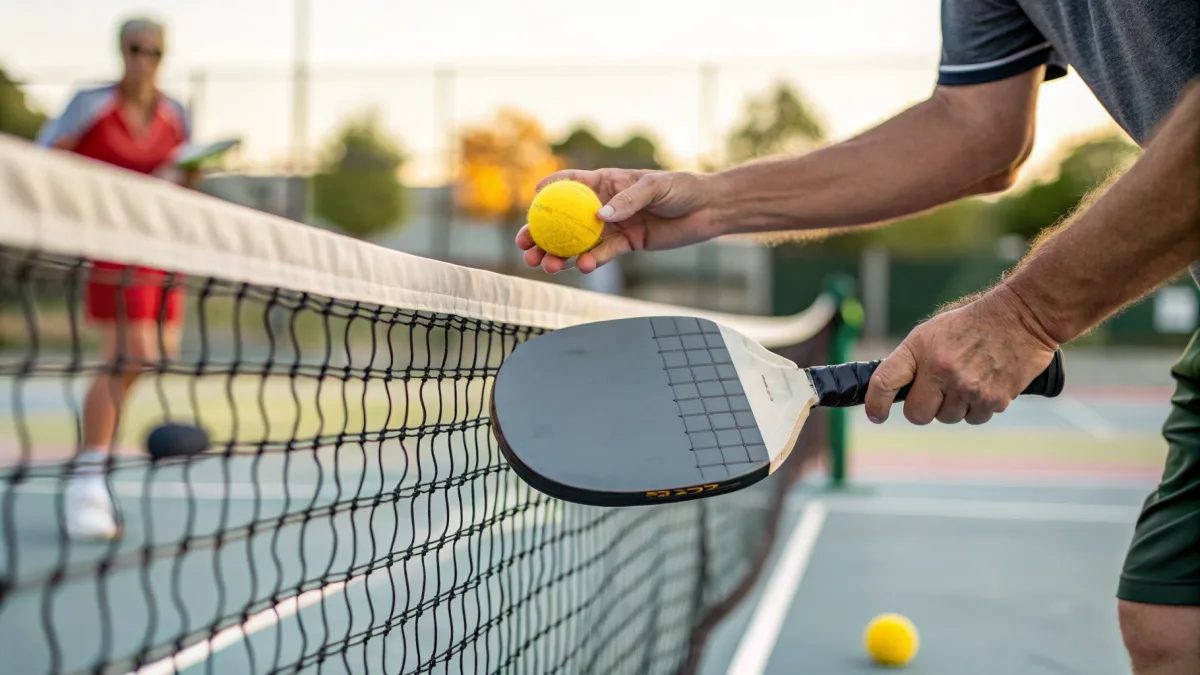
A fault ends the rally and either scores a point for the serving team or causes a side-out. The common faults: hitting the ball out of bounds, hitting it into the net, volleying before the double bounce, volleying from the kitchen, and a serve that lands outside the service box or in the kitchen.
Line calls are the honour system in recreational play: if you're not sure a ball was out, it's in. Call your own side's lines, and don't argue your opponents' calls — the culture of the sport depends on it.
Switching sides and stacking (brief)
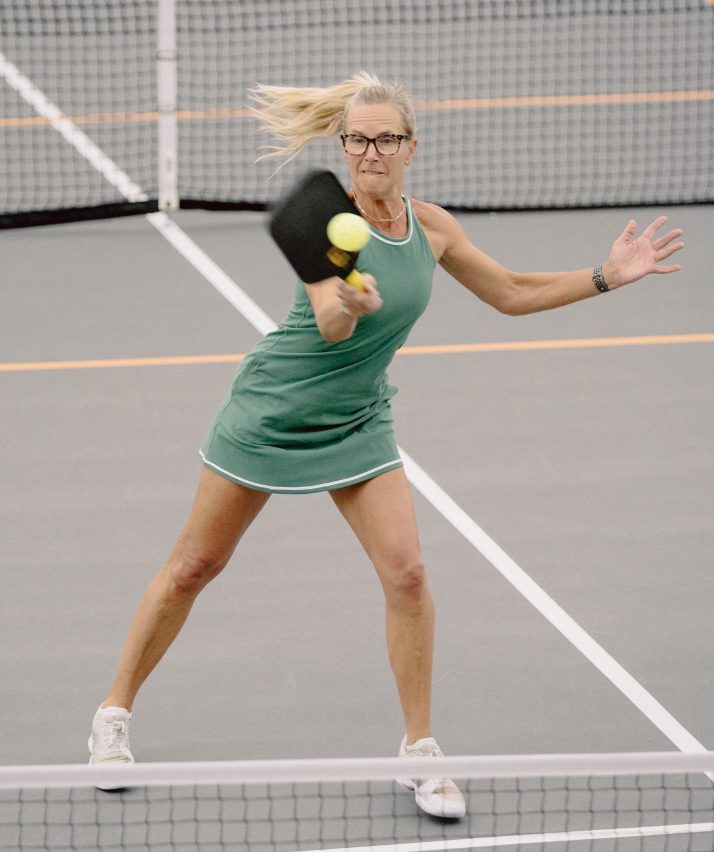
In doubles, partners switch sides of the court each time their team scores a point while serving. The starting server of each team begins on the right (even) side when their score is even and the left (odd) side when it's odd — which is how you can always check whether you're in the right place.
Stacking — where partners arrange themselves on the same side deliberately — is an advanced tactic. Beginners should ignore it until the basic rotation is automatic.
How games end: win by 2
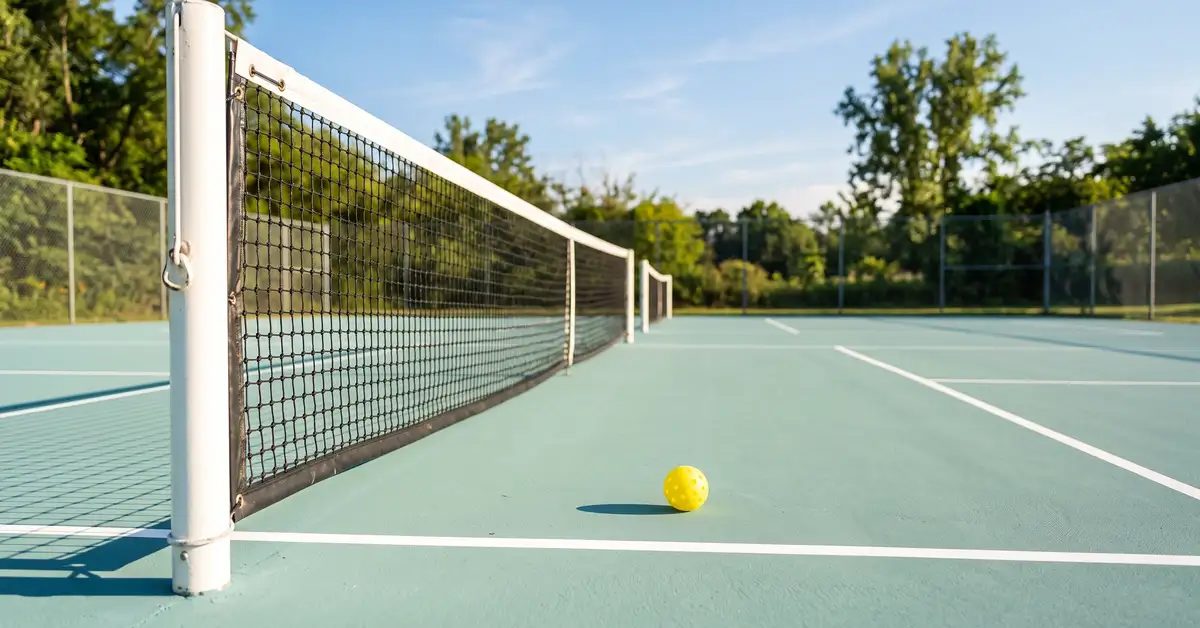
A game ends at 11 points with a 2-point margin — so 11–9 wins, but 10–10 continues until someone leads by two. Some tournaments play to 15 or 21 with the same win-by-2 rule; casual games almost always use 11.
In a match (best of three games), teams switch sides between games, and in a deciding third game they switch sides when the first team reaches 6 points.
Your first game checklist
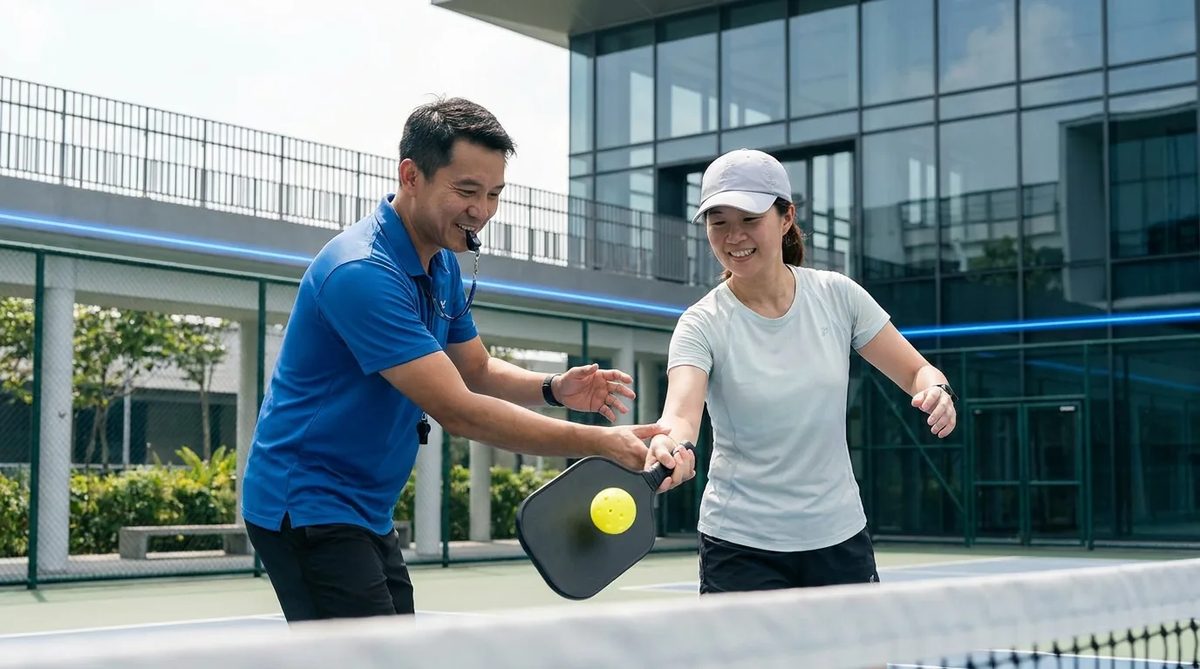
Before your first game: know the serve (underhand, diagonal, below the waist), the double-bounce rule, and the kitchen rule. Call the score out loud. Bring water, court shoes (not running shoes), and a few balls — the X-40 is the standard outdoor ball and a 12-pack will cover your group.
And the most important rule of all: it's a social sport. Introduce yourself, rotate partners, and don't keep score of other people's mistakes. Everyone was a beginner once, and most club players remember it.
Best outdoor ball — the club standard
Franklin Sports X-40 Outdoor Pickleballs (12-pack)
40 holes · Seamless one-piece · USA Pickleball approved
- + True, consistent bounce outdoors
- + Official ball of the US Open
- − Cracks in cold weather — keep spares
Typical price: ≈ $30
Check price on Amazon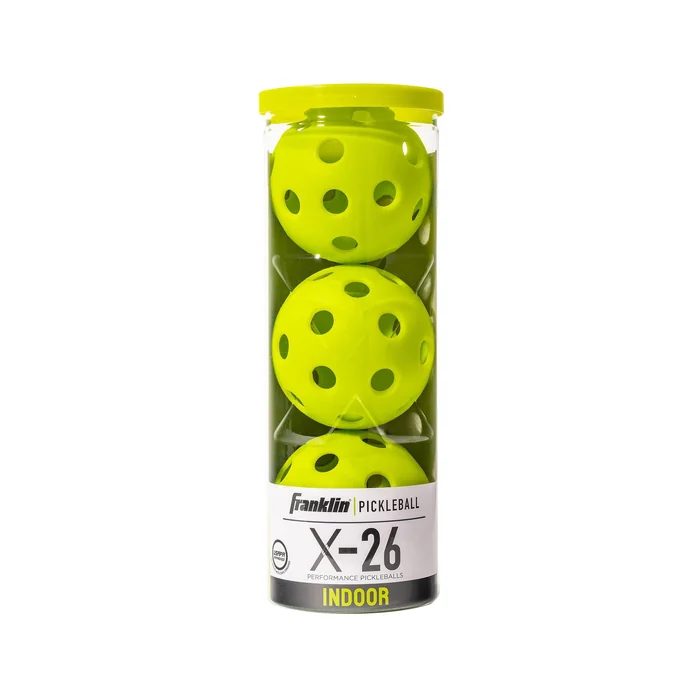
Best indoor ball
Franklin Sports X-26 Indoor Pickleballs (12-pack)
26 larger holes · 26 g · Built for gym floors
- + Lighter, slower — suits indoor rallies
- + Easy to see under gym lights
- − Useless outdoors — wind pushes it around
Typical price: budget
Check price on AmazonFrequently asked questions
How do you score in pickleball?
Only the serving team can score. Games go to 11 points, win by 2. The score is called as three numbers: serving team's score, receiving team's score, server number (1 or 2).
What is the double-bounce rule?
After the serve, each side must let the ball bounce once before volleys are allowed. The receiver lets the serve bounce, the server lets the return bounce, then volleys are legal.
What is the kitchen in pickleball?
The kitchen is the 7-foot non-volley zone on each side of the net. You can stand in it, but you can't hit a volley while touching it.
Can you volley in pickleball?
Yes, after the double bounce — as long as you're not standing in the kitchen. Volleys are a huge part of the net game.
How does serving work in doubles?
Each team gets two serves per turn (one per player), except the first serving team of the game, which gets only one. Partners switch sides each time their team scores while serving.
What happens if the score is tied at 10–10?
Play continues until one team leads by 2 points. There is no cap in standard rules, though some casual groups play win-by-2 up to a limit.
Can the ball touch the net on a serve?
Yes — a serve that clips the net and lands in the correct service box is legal and play continues. There is no 'let' replay in pickleball.
Do you have to serve underhand?
Yes. The serve must be underhand with the paddle below the wrist and contact below the waist. Drop serves, where the ball bounces first, are also legal.
As an Amazon Associate, Pickleball Pick earns from qualifying purchases. Our picks are chosen by research, not by commission — see our Affiliate Disclosure.