
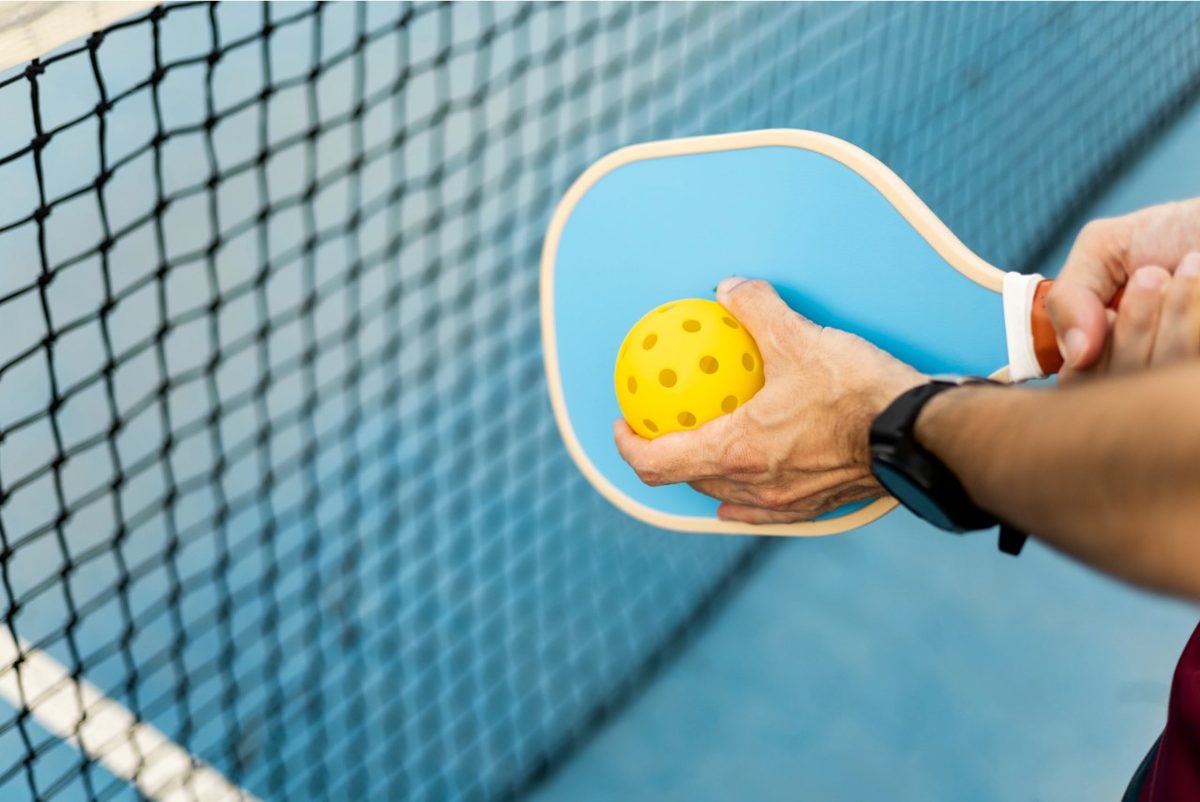
Most beginners grip the paddle wrong in exactly the same way: too tight, with the wrong hand position, and a grip size they never checked. The result is less control, less spin — and, for a lot of players, a sore elbow within the first month.
This guide fixes all three. The continental grip takes two minutes to learn, the pressure check takes ten seconds, and the elbow fixes are mostly about grip size and paddle weight rather than technique. Nothing here needs a coach — just a paddle and a wall to hit against.
The short answer
| The grip | Continental ('handshake') — one grip for every shot |
| Pressure | 3–4 out of 10 — firm enough to hold, loose enough to feel |
| Size check | Index finger fits snugly between fingertips and palm |
| Sore elbow | Usually grip too small, paddle too heavy, or grip too tight |
| Overgrip | Adds size and tack; replace when smooth or shiny |
The continental grip, step by step
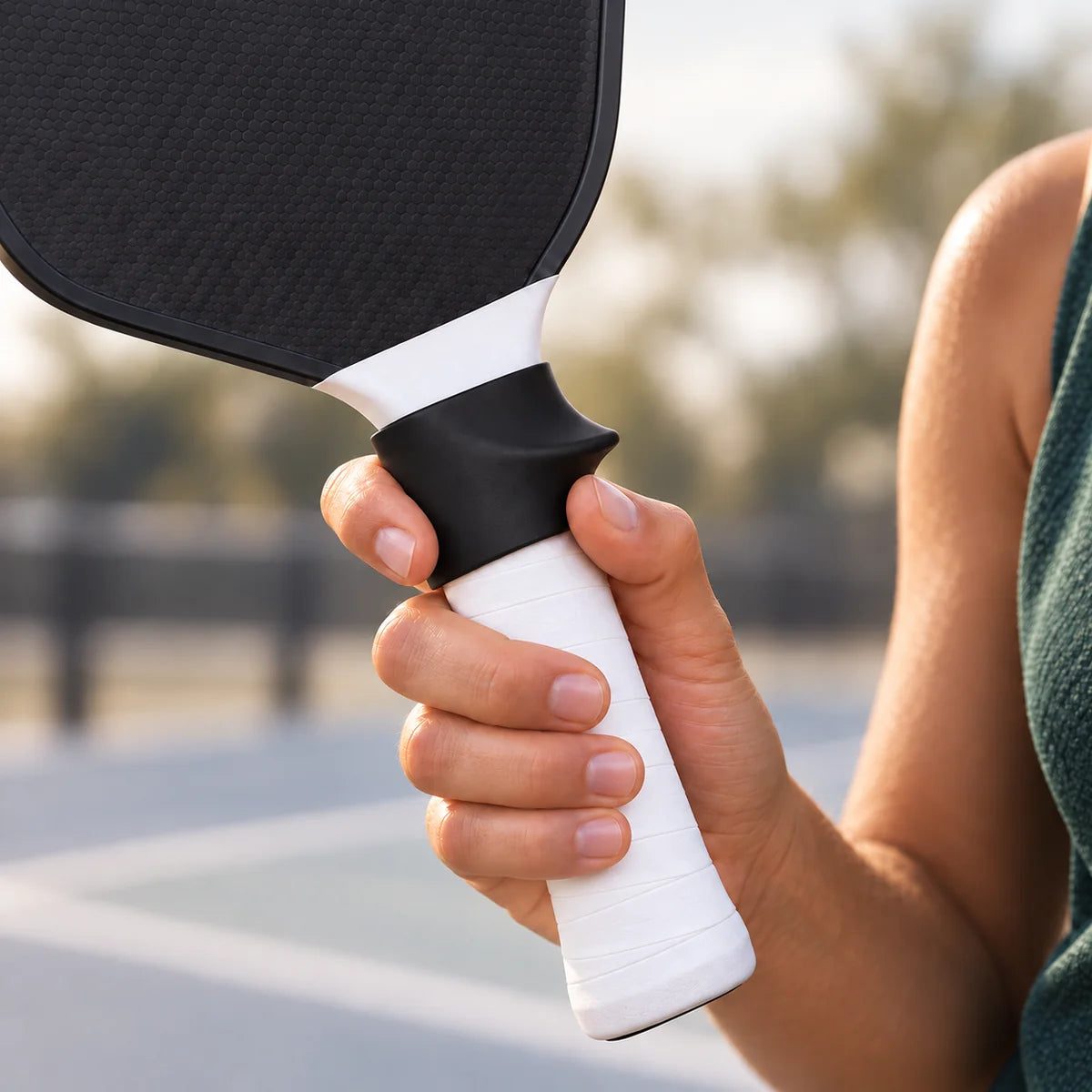
Hold the paddle out in front of you with the face vertical, like you're shaking hands with it. Shake hands with the handle: your palm on the back bevel, your index knuckle on the top bevel, your fingers wrapped naturally around the grip. That's the continental grip, and it's the one grip that works for forehands, backhands, serves, dinks and overheads.
Beginners often start with an eastern forehand grip (palm more behind the handle), which feels powerful on forehands but leaves the backhand stranded. The continental grip is neutral — it does everything adequately, which is what you want while you're learning.
The finger-gap test
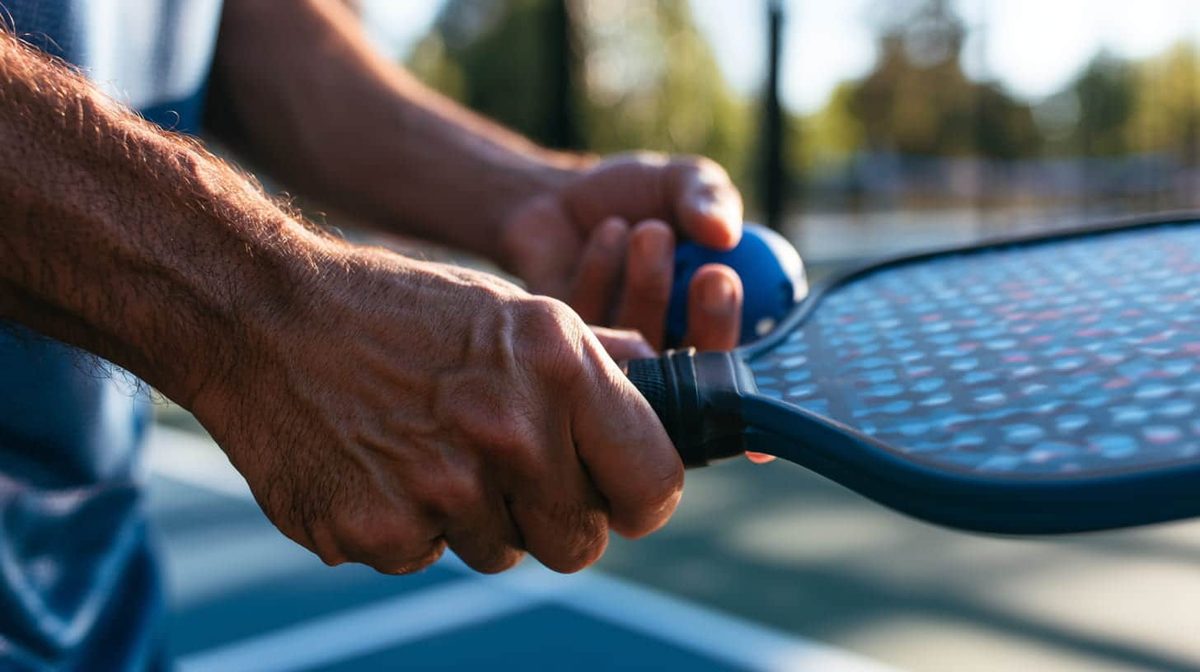
Grip size is the most commonly ignored spec in pickleball. To check yours, hold the paddle in your playing hand and slide the index finger of your other hand into the gap between your fingertips and the heel of your palm. It should fit snugly. If there's space to spare, the grip is too big; if your finger won't fit, it's too small.
Most adults use 4¼ inches. Smaller hands often suit 4 inches; larger hands 4½. When in doubt, go smaller — an overgrip adds about a sixteenth of an inch and you can always add one, but you can't shrink a grip.
Grip pressure: hold it like a bird
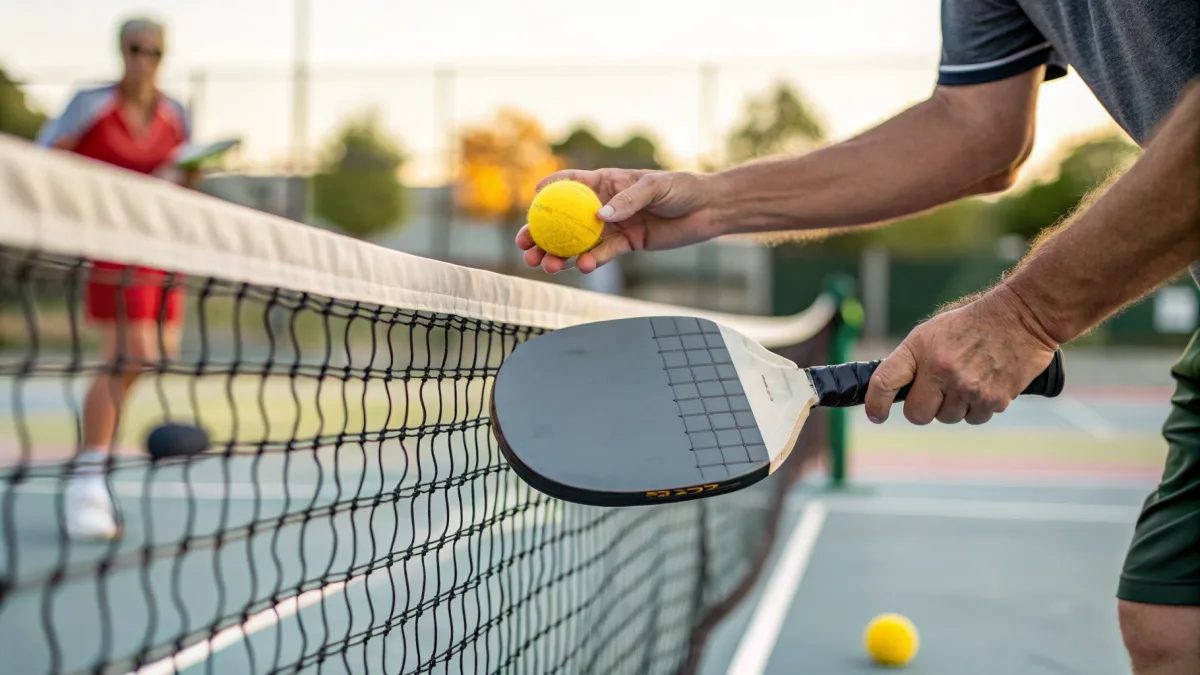
The old coaching line is to hold the paddle like a bird: firm enough that it can't fly away, loose enough that you don't hurt it. On a 1–10 scale, most shots want a 3 or 4. Beginners typically grip at an 8 — white knuckles, stiff wrist, no feel.
A tight grip does three bad things: it kills your touch on dinks, it transmits vibration straight to your elbow, and it slows your hand speed. Practice by dinking against a wall with the loosest grip you can manage without dropping the paddle. Your touch will improve within a session.
Eastern vs continental for beginners
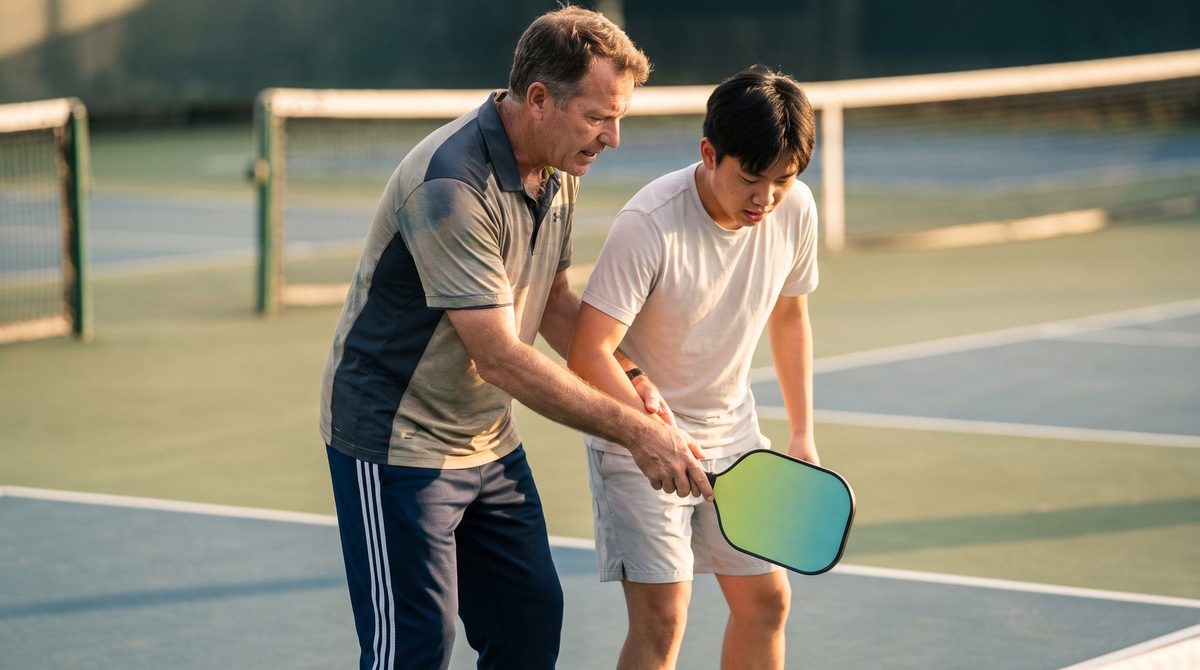
Tennis players often arrive with an eastern or semi-western forehand grip, and it feels great — until the first backhand. The eastern grip closes the face on backhands and forces awkward wrist positions. The continental grip keeps the face neutral on both sides.
Our advice: learn continental first, and learn it properly. Once your backhand is reliable, you can experiment with slight grip shifts for specific shots. But the players who skip the continental foundation usually come back to it later, after months of fighting their backhand.
When to change grip (backhand)
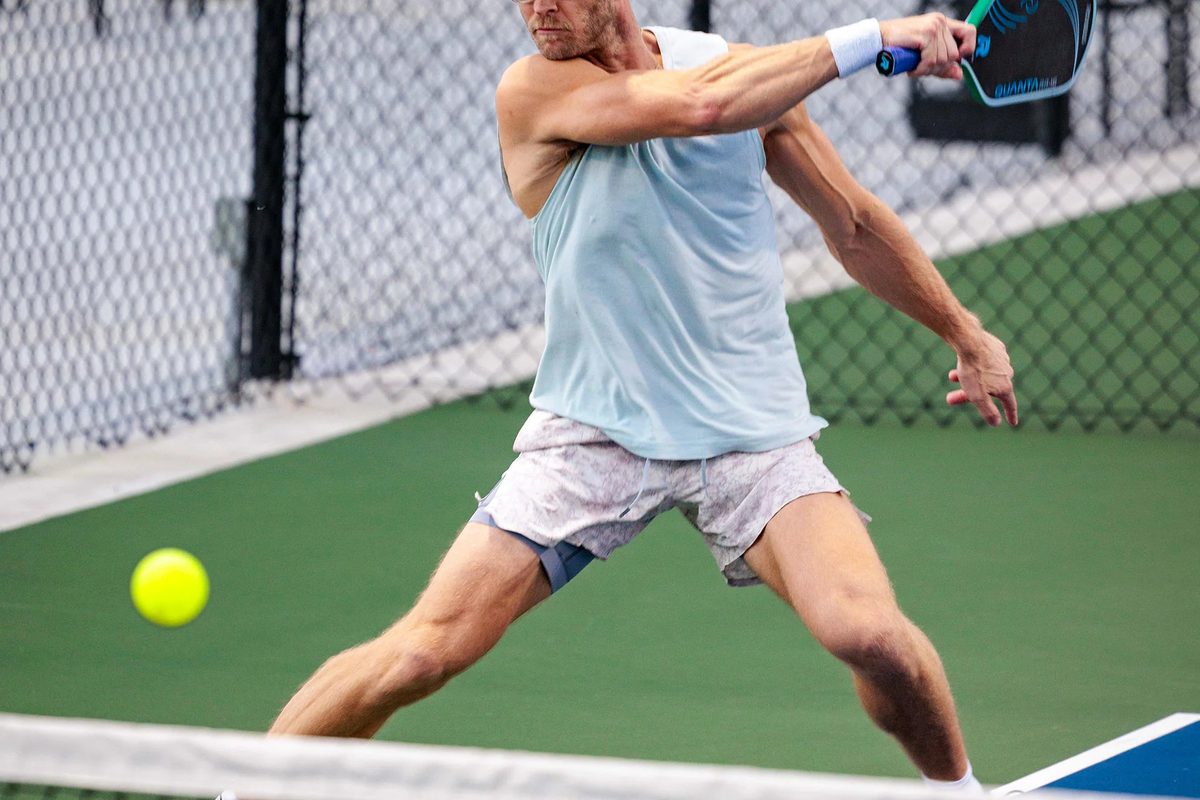
With a continental grip, you don't need to change grips between forehand and backhand — that's the point. The adjustment is in your wrist and shoulder, not your hand. On the backhand, keep the same grip and let your wrist firm up slightly through contact.
Two-handed backhands are the exception: your non-dominant hand goes above your dominant hand on the handle, and you'll want a handle at least 5½ inches long. If you play two-handed, check handle length before you buy a paddle.
Overgrips: when and how
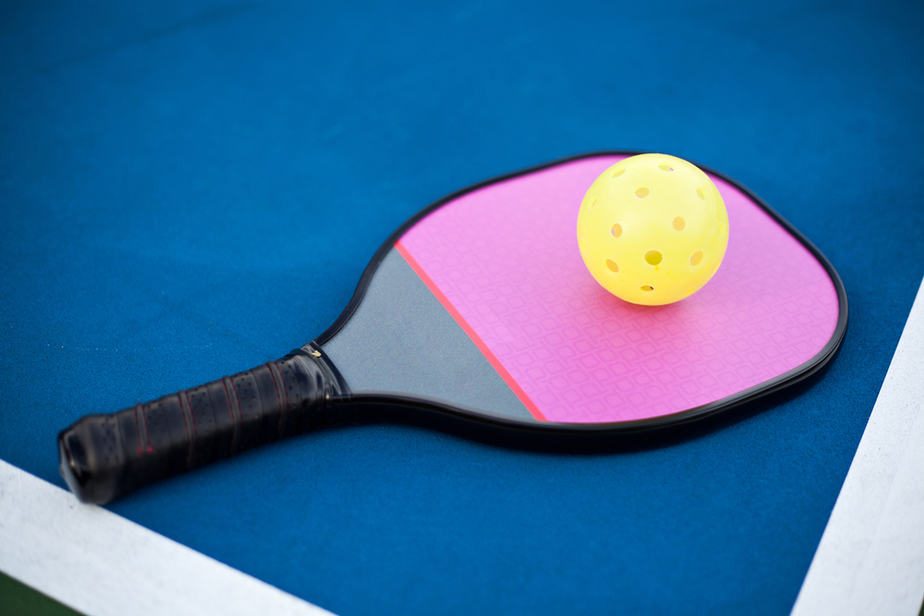
An overgrip wraps over your paddle's original grip. It does three things: adds a little size, adds tack (grip), and absorbs sweat. Replace it when it feels smooth, shiny or slippery — for most players that's every few weeks of regular play.
Overgrips also let you fine-tune grip size: one overgrip adds roughly 1/16 inch. If your grip is slightly too small, an overgrip is a $5 fix. Lighter paddles like the JOOLA Essentials and the Selkirk Evo Hybrid Max also reduce the strain that makes players over-grip.
Best first paddle, no fuss
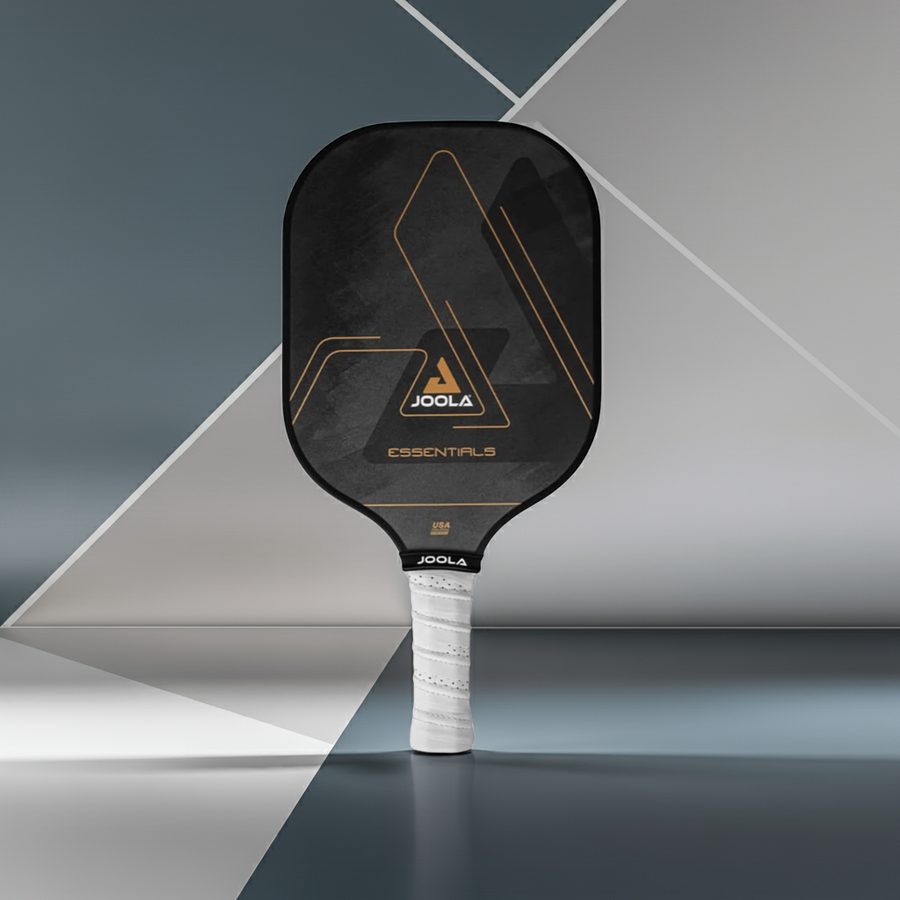
JOOLA Essentials
12 mm core · Reinforced fiberglass face · 8.2 oz
- + Forgiving and easy from day one
- + JOOLA quality at entry price
- − Serious players will outgrow it within a year
Typical price: budget
Check price on Amazon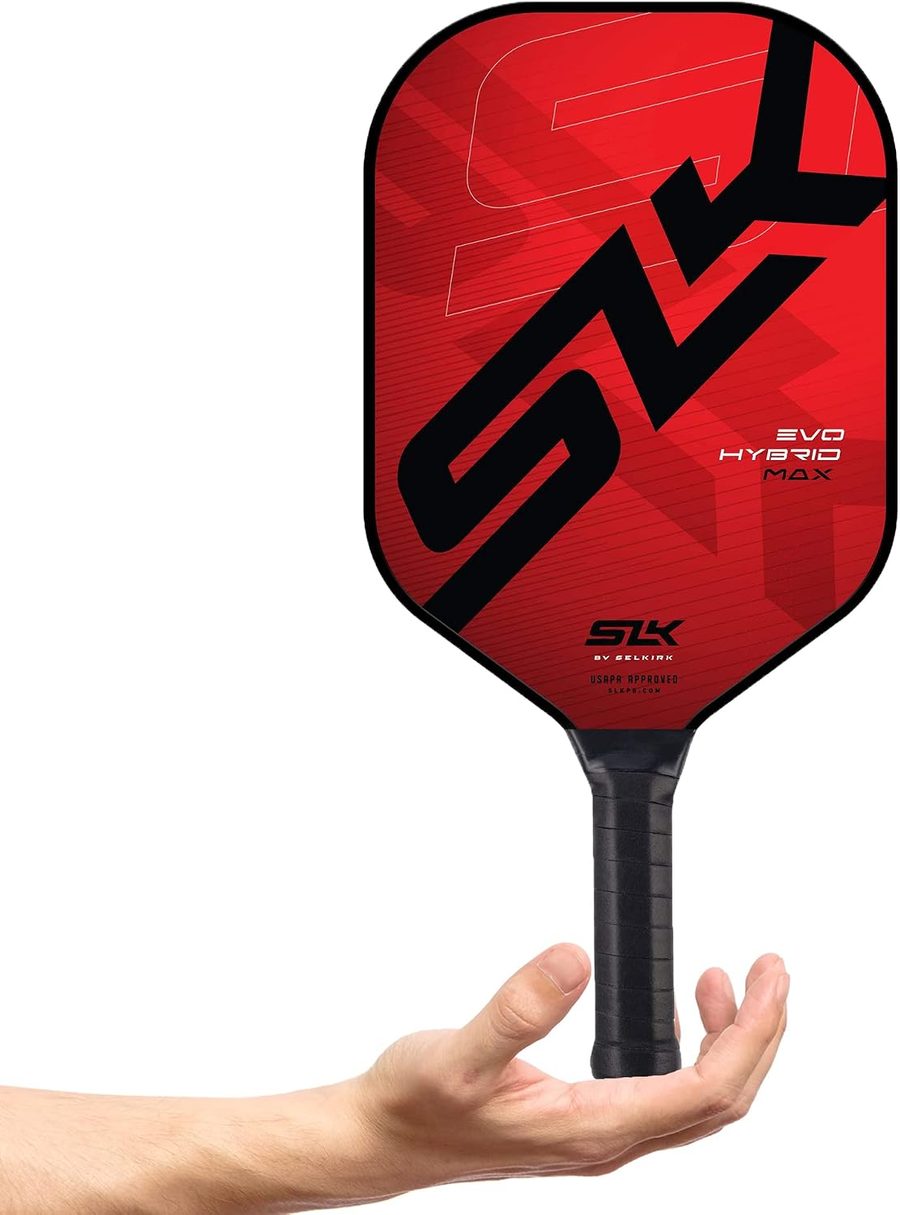
Best value starter paddle
Selkirk SLK Evo Hybrid Max
13 mm Rev-Hybrid core · C7-Flex fiberglass · 7.6–8.0 oz
- + Light, easy power, big sweet spot
- + Selkirk build quality at a low price
- − 13 mm core is livelier — less soft touch
Typical price: ≈ $60
Check price on AmazonSore elbows: the usual causes
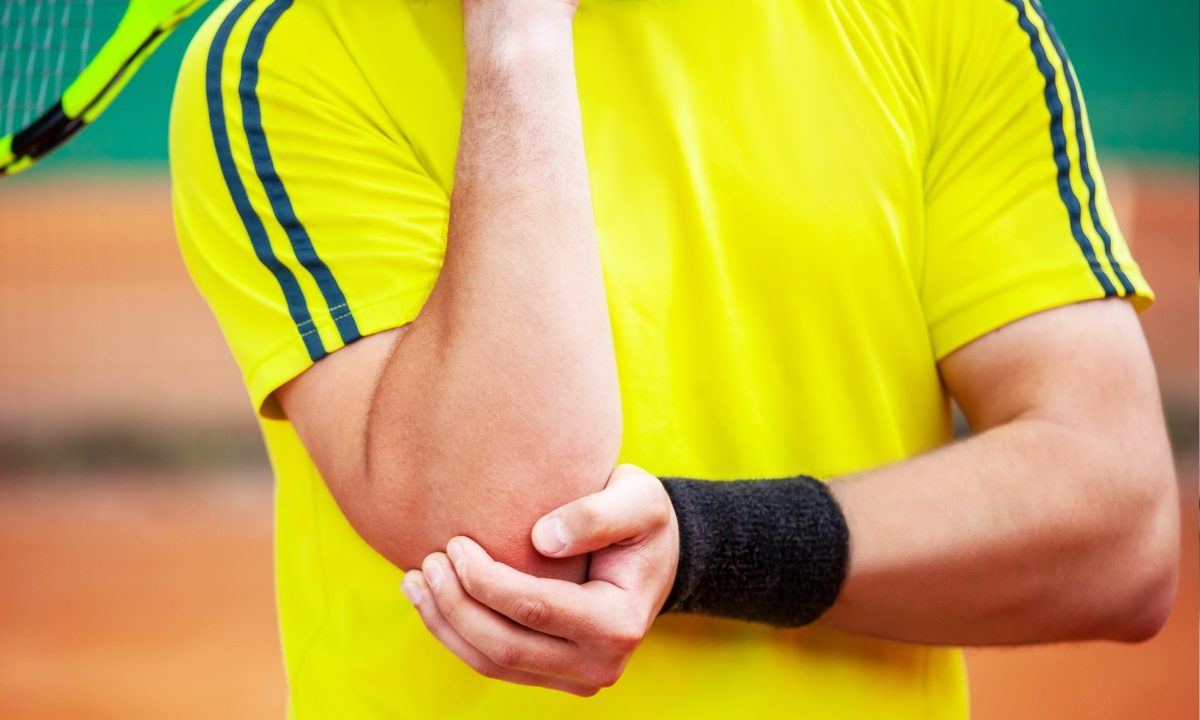
Elbow soreness in pickleball usually comes from one of three things: a grip that's too small (so you squeeze too hard), a paddle that's too heavy or too stiff, or a grip that's too tight regardless of size. Technique matters less than equipment here — most sore elbows improve with a bigger grip, a lighter paddle, or both.
If soreness persists for more than a couple of weeks, or you feel pain when gripping everyday objects, see a doctor or physio rather than playing through it. This guide is general information, not medical advice.
Best control feel
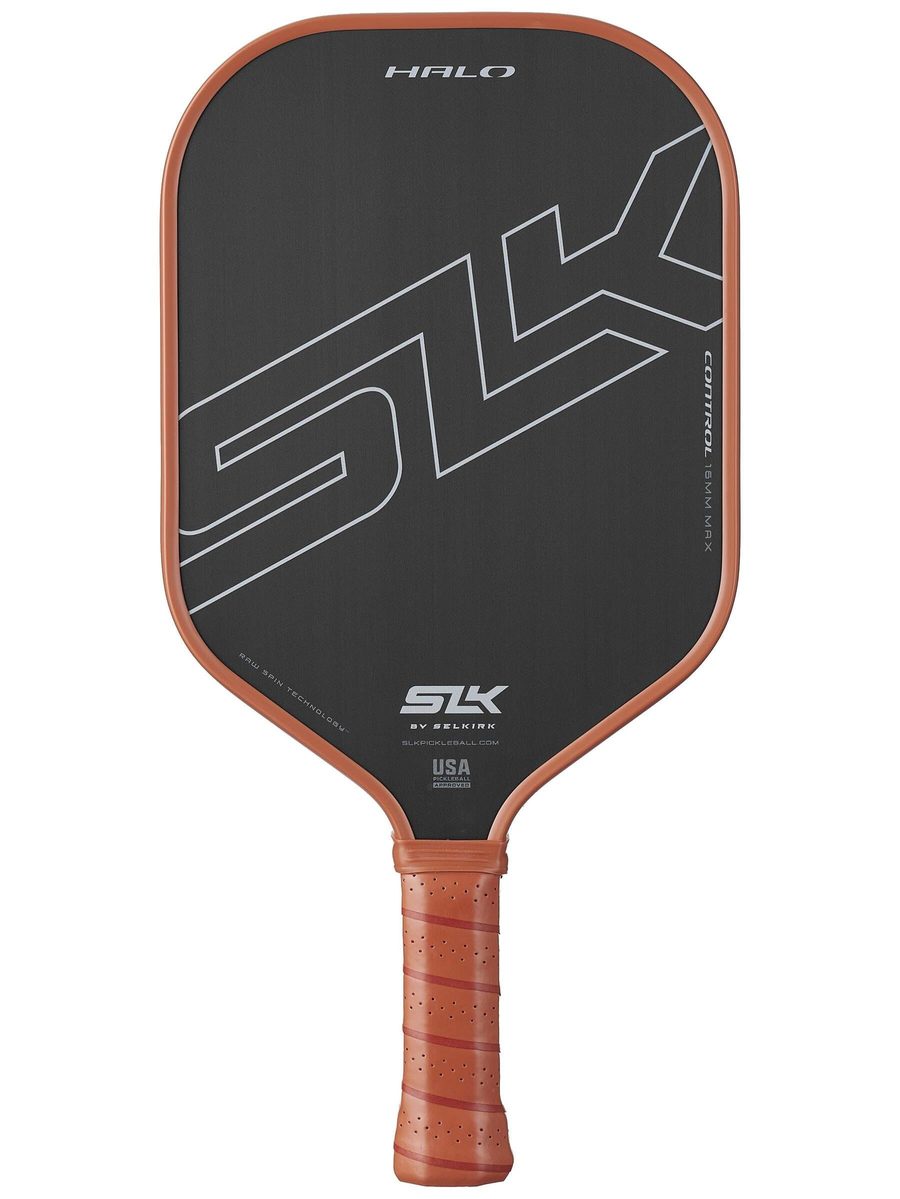
Selkirk SLK Halo Control Max
16 mm Rev-Control core · Raw carbon face · Max shape
- + Soft, predictable touch at the net
- + Raw carbon adds real spin
- − Less free power than fiberglass faces
Typical price: ≈ $150
Check price on Amazon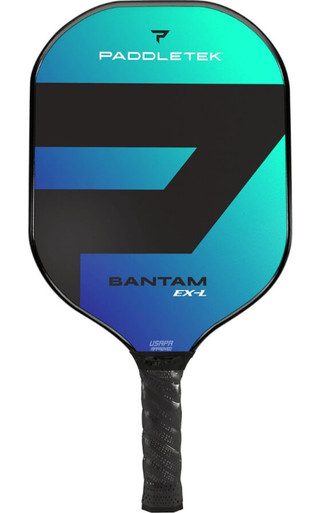
Best for control-first players
Paddletek Bantam EX-L
12.7 mm Bantam PolyCore · Polycarbonate face · 7.8–8.4 oz
- + Superb touch and reset game
- + Quiet, soft feel off the face
- − You supply the power yourself
Typical price: premium
Check price on AmazonGrip size and elbow pain
The link between grip size and elbow pain is straightforward: a grip that's too small forces your forearm muscles to work harder to stabilize the paddle, and that extra effort goes straight to the tendons at the elbow. It's the single most common equipment cause of pickleball elbow.
If your elbow is sore and your grip is on the small side, try one size up (or add an overgrip) before changing anything else. It's the cheapest fix in the sport, and it works surprisingly often.
Drills to lock in the grip
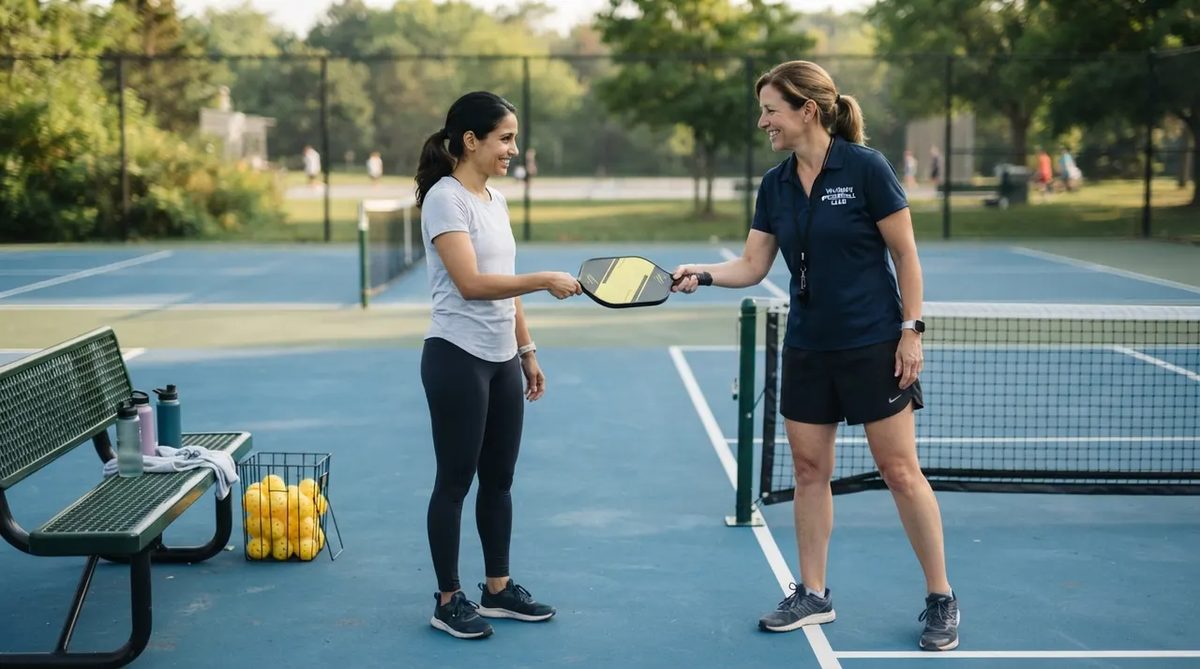
Three drills that build a reliable grip. First, the wall dink: stand six feet from a wall and dink softly for two minutes, focusing on a loose grip — if the ball pops up, you're squeezing. Second, the grip check: between rallies, look at your hand and reset it to continental; most grip errors creep in gradually. Third, the drop-and-catch: hold the paddle loosely, let it drop an inch, and catch it — it teaches your hand the minimum pressure needed.
Ten minutes of grip drills before a session will do more for your touch than an hour of random rallying.
Quick self-check before every game
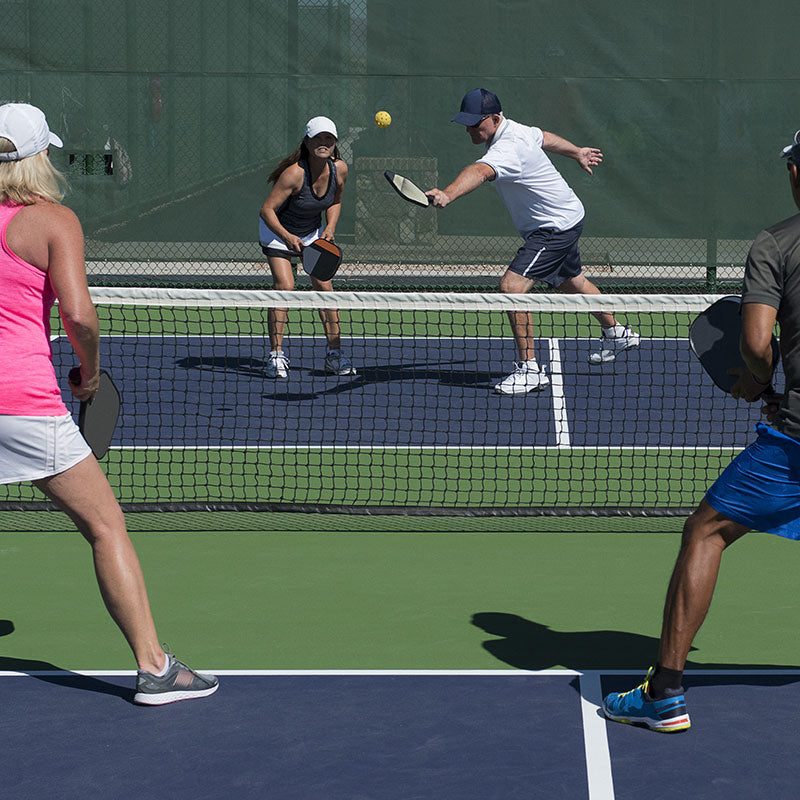
Before your first serve, run the three-point check: grip position (continental — handshake the handle), grip size (finger-gap test), grip pressure (3 out of 10 — wiggle your fingers between points to stay loose).
Make it a habit and it takes five seconds. Skip it, and the old habits — too tight, too small, wrong position — creep back within a game or two. The best players we know check their grip every single time they pick up a paddle.
Frequently asked questions
What is the correct grip for pickleball?
The continental grip — like shaking hands with the paddle handle. It works for forehands, backhands, serves, dinks and overheads, so beginners only need to learn one grip.
How tight should I grip a pickleball paddle?
About 3–4 out of 10 for most shots. A tight grip kills touch, slows your hands and transmits vibration to your elbow. Hold it like a bird: firm enough to keep, loose enough not to hurt.
What grip size do I need?
Most adults use 4¼ inches. Check with the finger test: your other index finger should fit snugly between your fingertips and palm. When in doubt, go smaller — an overgrip can add size.
Why does my elbow hurt after pickleball?
The most common causes are a grip that's too small, a paddle that's too heavy or stiff, and gripping too tightly. Try a bigger grip and a lighter, softer paddle first. Persistent pain needs a doctor, not a new paddle.
Should I use an overgrip?
Yes if your grip feels slippery, slightly small, or worn smooth. Overgrips add tack and about 1/16 inch of size, and they're cheap to replace every few weeks.
Do I change my grip for backhands?
No — with a continental grip you keep the same hand position for forehand and backhand. The adjustment is in your wrist and shoulder, not your grip.
What grip do tennis players use in pickleball?
Tennis players often start with an eastern forehand grip, but it causes backhand problems. Learn the continental grip first, even if the eastern feels more powerful at first.
How do I stop squeezing the paddle too hard?
Practice dinking against a wall with the loosest grip you can manage, and wiggle your fingers between points to reset. Most players grip at an 8 out of 10 when a 3 or 4 is right.
As an Amazon Associate, Pickleball Pick earns from qualifying purchases. Our picks are chosen by research, not by commission — see our Affiliate Disclosure.